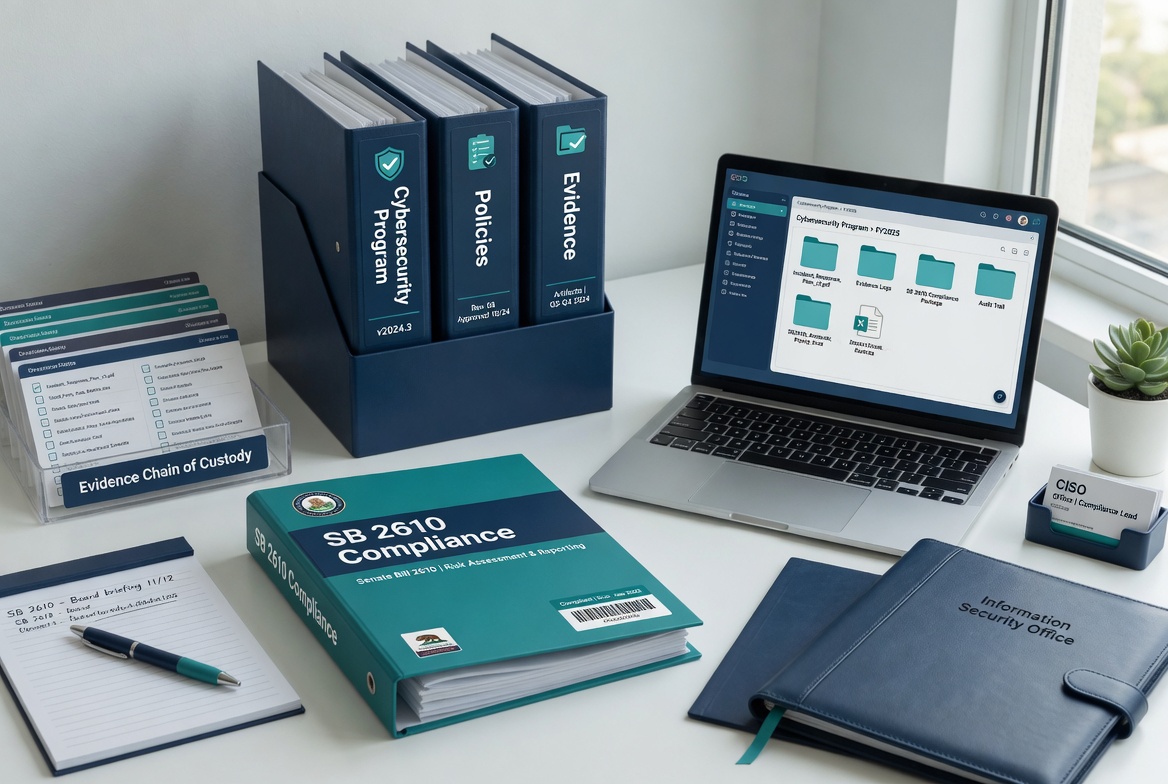
Texas SB 2610 helps law firms establish a stronger compliance foundation — but only if they can demonstrate that a reasonable cybersecurity program was in place beforehand.
Documentation is the foundation of that proof.
Step 1: Create a Cybersecurity Program Overview
Start with a master document that includes purpose, scope, governance, and high-level controls.
Step 2: Develop Supporting Policies
Create clear policies for Access Management, Incident Response, Vendor Risk, Backups, and Security Awareness.
Step 3: Collect Evidence of Implementation
Maintain dated evidence such as MFA reports, backup test results, access review logs, and vendor security assessments.
Step 4: Establish a Review Schedule
Conduct a full program review at least annually and update documentation after any significant change.
Quick Assessment
Want to see where you currently stand?
Run our free Instant Cybersecurity Audit at audit.emailmenow.com.
Need help creating professional documentation? Contact EmailMeNow IT Consulting — we can provide ready-to-use templates tailored for Texas law firms.