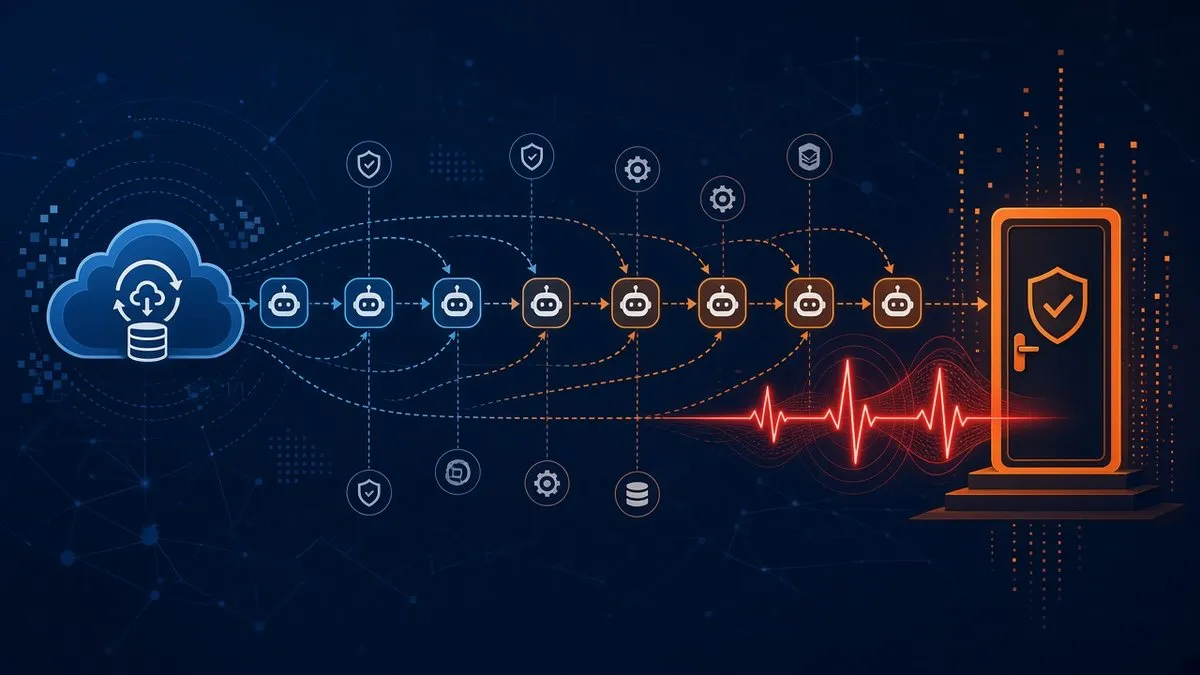
Yes — the FBI published FLASH-20261113-001 on November 13, 2026, warning that malicious actors have weaponized ARTEX, an open-source, large language model (LLM)-driven agentic penetration-testing framework written in Go, to automate intrusions “at machine speed.” The FBI PDF says campaigns have run since at least August 2026 across financial services, government, technology, defense, and other sectors, and that some intrusions progressed from initial targeting to privileged access in under three hours.
The same FLASH ties ARTEX to a ConnectWise Cloud Backup supply-chain compromise in which attackers attempted sign-ins to more than 2,250 downstream Microsoft 365 tenants — a figure also cited in Microsoft’s October 21 threat research on Storm-0940. Huntress independently confirmed abused ConnectWise (formerly SkyKick) vendor credentials in customer Entra tenants in mid-October 2026.
This is not a Texas-only breach notice. It is a national access-hygiene story for any small business on Microsoft 365 that ever authorized a backup, PSA, or RMM vendor app. The FBI asks organizations to tighten access controls, monitor for automated sign-in and Graph activity, and report incidents to ic3.gov. This post cites only those primary sources plus November 17, 2026 EmailMeNow admin audits, website-tech, blacklist, cybersquat, and CourtListener on connectwise.com and skykick.com (not the public homepage query form).
For a sibling vendor-cloud story that also discusses ARTEX-style automation, see Barracuda’s unretired vendor key intrusion.
Snapshot
| Field | Detail |
|---|---|
| FBI product | FLASH-20261113-001 — TLP:CLEAR — 13 November 2026 (PDF) |
| Framework | ARTEX — open-source, multi-agent LLM pentest platform in Go; integrates external models (FBI cites frontier and open models) |
| Malicious use window | Since at least August 2026 (FBI) |
| Speed claim | Some intrusions: initial targeting → privileged access in under 3 hours (FBI; Microsoft repeats for Storm-0940 ARTEX activity) |
| Origin story | Released on GitHub by “Autumn-27” in July 2026 (FBI); developer removed the public repo October 8, 2026 after abuse reports — forks, mirrors, and ARTEX PRO remain available (FBI) |
| Exposure research | 1,600+ publicly exposed ARTEX console instances cited in the FLASH (via Censys research footnote) |
| Supply-chain anchor | ConnectWise Cloud Backup (formerly SkyKick) — vendor credential compromise; 2,250+ downstream M365 tenant sign-in attempts (Microsoft) |
| Threat actor (Microsoft) | Storm-0940 — China-state–aligned actor Microsoft tracks since 2021; ARTEX automation as early as September 2026 |
| FBI / IC3 reporting | Suspicious activity → local FBI cyber squad; criminal activity → IC3 |
| Texas tie | None in the primary sources reviewed |
What ARTEX is (per FBI and Microsoft)
ARTEX is not a Microsoft or ConnectWise product. Per the FBI FLASH and Microsoft:
| Property | Detail |
|---|---|
| Architecture | Multi-agent system; high-level goals in natural language → machine commands with minimal human interaction |
| Languages / UI | Written in Go; UI defaults to English; Microsoft notes optional Korean, Mandarin, Spanish, or Japanese |
| Models | FBI: integrates Anthropic Claude, OpenAI GPT, DeepSeek, GLM, Grok, Kimi, and others; attacker instances often favor Chinese-origin models (DeepSeek Flash family cited) |
| Intended use (developer) | Authorized security testing within defined scope (per FBI narrative) |
| Observed abuse | Autonomous phases from reconnaissance through data exfiltration; high-volume, forensically noisy traffic that may alert defenders but completes quickly |
Do not describe ARTEX as “ConnectWise malware.” ConnectWise’s role in this cluster is compromised multi-tenant application credentials abused to authenticate into customer Entra tenants — not a flaw in ARTEX itself.
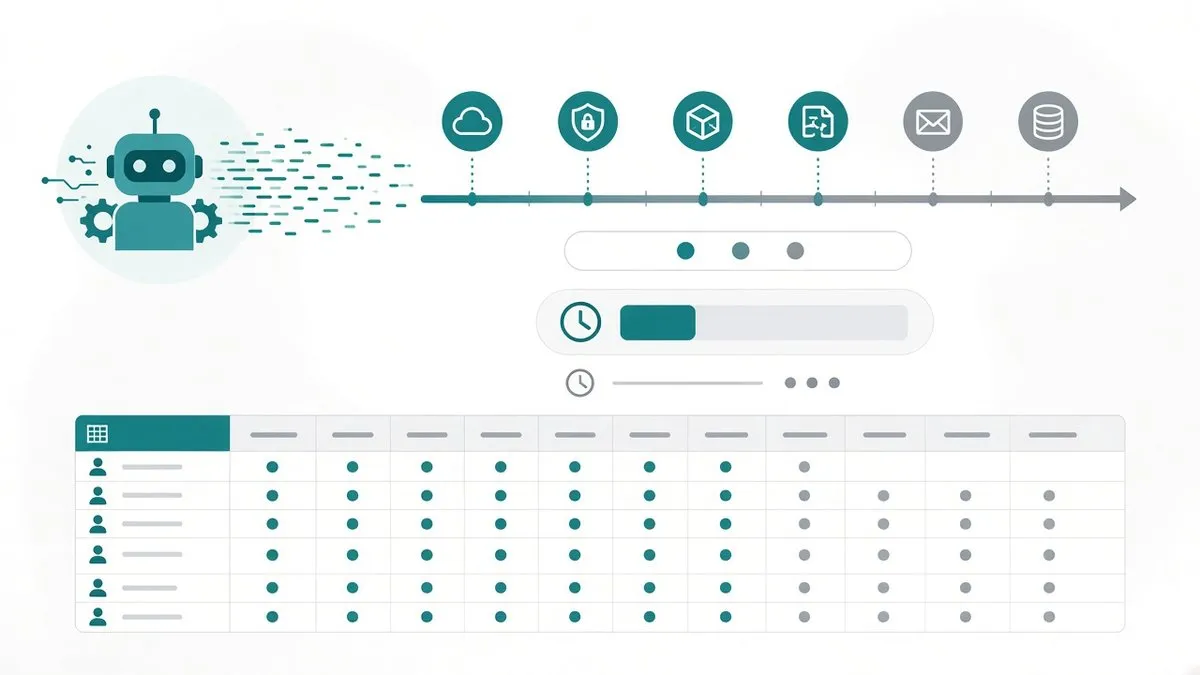
ConnectWise Cloud Backup chain (verified timeline)
These dates come from Microsoft, Huntress, and the FBI FLASH — not from unverified leak-site claims.
| Date (2026) | Event (sourced) |
|---|---|
| Oct 10–14 | Microsoft: Storm-0940 infrastructure at 144.172.64[.]99 ran an automated cross-tenant password spray — 151,000+ failed logons, peak 2,900 failures/minute on Oct 11; no successful authentication observed in that spray window |
| Oct 15–16 | Public reporting and ConnectWise advisories on Cloud Backup unauthorized access; Microsoft aligns password-spray and application-abuse IP ranges |
| Post-compromise | Microsoft: after ConnectWise app credentials were abused, ARTEX-accelerated service-principal sign-ins and Microsoft Graph activity (reconnaissance, application credential changes, privilege attempts) in multiple customer environments |
| Scale (Microsoft) | More than 2,250 Microsoft 365 tenant sign-in attempts using the compromised trust relationship |
| Huntress (Oct 16) | Confirmed ConnectWise Cloud Backup app ID 506e08f9-6e9a-4da4-942b-a099a03644ae and related Cloud Management apps abused; documented Global Administrator self-grant and credential planting on other apps in reviewed tenants |
Microsoft stresses: successful application authentication does not prove customer data was accessed or exfiltrated. Huntress in reviewed tenants also noted no mailbox or file manipulation evidence — while warning that Graph directory reads may leave no audit record.
Application IDs Huntress named (disable — do not delete first)
Search Entra by application ID, not display name:
| Application (Huntress) | Application ID |
|---|---|
| ConnectWise Cloud Backup (formerly SkyKick) | 506e08f9-6e9a-4da4-942b-a099a03644ae |
| ConnectWise Cloud Management — MS Teams | 24205314-2b89-4e07-a2a4-579e898a5640 |
| ConnectWise Cloud Management — Exchange Online | b78f6a77-d4e5-46fb-87e5-d1648bd02519 |
| ConnectWise Cloud Management — SharePoint Online | b2b55f5b-7758-4719-8d8f-88ae172e6bdb |
Keep affected ConnectWise connections disabled until ConnectWise publishes formal restoration steps (Microsoft + FBI FLASH cite the same containment principle). Disable enterprise applications to cut sign-ins; preserve configuration and logs before irreversible deletes.
Practical steps for small businesses
Microsoft 365 / Entra (this week)
| Step | Why it matters for ARTEX-era automation |
|---|---|
| Inventory every enterprise app and consent grant — especially backup, PSA, RMM, and SOC tools | Supply-chain entry is pre-trusted OAuth, not a user clicking a phish |
| Review service-principal sign-ins separately from user sign-ins | ARTEX campaigns generate high-volume app-only traffic (Microsoft) |
| Search audit logs for new application secrets, app role assignments, privileged role grants, and new service principals | Huntress documented GA self-assignment and credential planting within minutes |
| Extend review to October 1, 2026 or earlier if logs allow (Microsoft / FBI) | ConnectWise activity cluster starts mid-October; password spray preceded it |
| Apply least privilege on multi-tenant vendor scopes | Over-scoped backup apps become cloud-wide keys |
| Turn on Conditional Access requiring phishing-resistant MFA for admins | Slows human takeover; pair with app consent policies |
Microsoft’s blog includes Defender XDR alert names (for example “Application self-assigned Global Administrator role”) — useful if your tenant licenses include those signals.
MFA and phishing resistance (your tenant, not the vendor’s console)
| System | YubiKey / FIDO2 | Google Authenticator / open TOTP | Grade (public docs) |
|---|---|---|---|
| Microsoft Entra ID (workforce) | Yes — security keys documented | Yes — Authenticator / TOTP paths | Strong |
| ConnectWise ScreenConnect admin | Yes — account security blog | Yes — same doc | Strong |
Critical distinction: Strong MFA on ScreenConnect or Entra user logins does not stop a compromised vendor application that already holds OAuth permissions. After vendor incidents, prioritize app consent review and service principal credential rotation alongside user MFA.
Recommended MFA tools (where documented)
| Product | Best for | Get it |
|---|---|---|
| YubiKey 5C NFC | USB-C laptops + NFC phones | Amazon |
| YubiKey 5 NFC | USB-A desktops + NFC phones | Amazon |
| Proton Pass | TOTP vault for apps without hardware-key support | Proton Pass |
We may earn a commission if you buy through the links above.
Questions for your MSP or backup vendor
- Which ConnectWise / SkyKick application IDs are still enabled in our tenant, and what Graph / ARM scopes does each hold?
- When were integration secrets last rotated — and did you review October 2026 service-principal sign-ins?
- Do you disable (not delete) unused vendor apps during offboarding?
- Will you share an Entra audit export covering Oct 1–16, 2026 for our files?
- If we never used Cloud Backup, can you prove the related service principals are absent or disabled?
Independent domain audits (admin API)
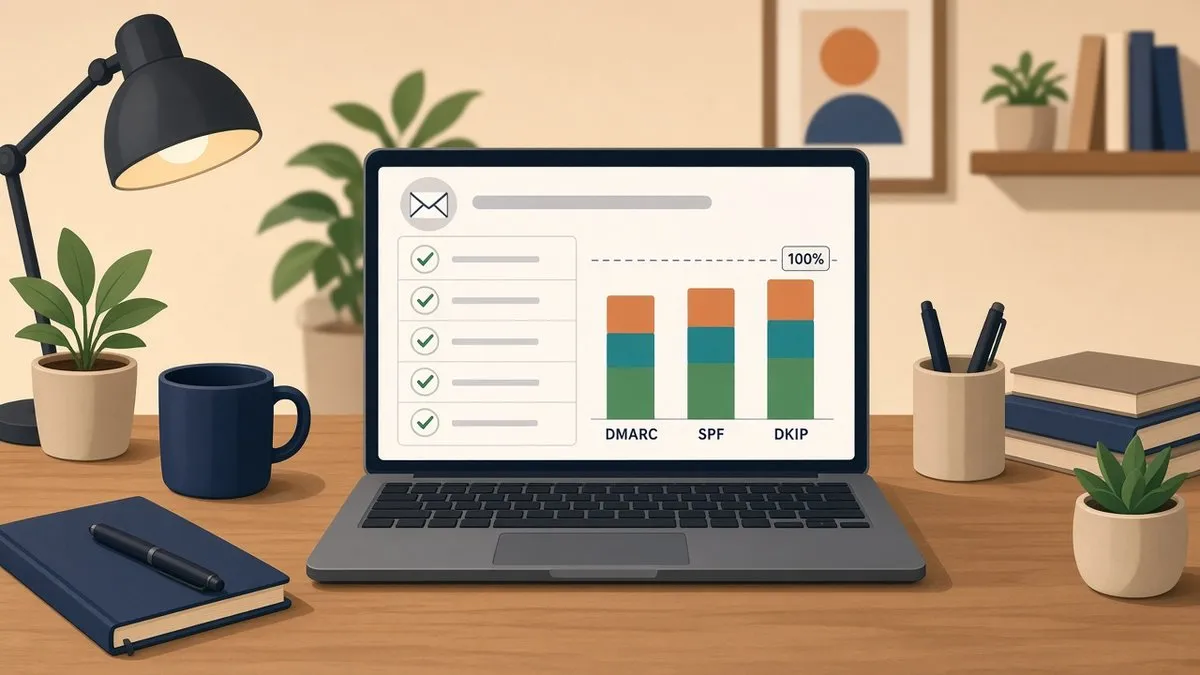
We ran EmailMeNow admin scans on November 17, 2026 via GET https://audit.emailmenow.com/api/admin/scan with scope=full (not the public homepage query form). 100% is the ideal overall domain-security score. 0 of 2 in-scope hosts reach it.
| Organization | Domain | Overall | Gap vs 100% |
|---|---|---|---|
| ConnectWise | connectwise.com | 77% | −23 |
| SkyKick (legacy brand) | skykick.com | 60% | −40 |
| Domain | Identity | Transport | Website |
|---|---|---|---|
| connectwise.com | 75% | 15% | 87% |
| skykick.com | 75% | 15% | 40% |
Both domains scored 100% on email infrastructure in this admin pass. The 15% transport gap is the familiar MTA-STS enforcement pattern — relevant because fake “ConnectWise security bulletin” or “disable OAuth app” mail still rides weak transport on the vendor domain, even though this incident was Entra application abuse, not SPF/DMARC failure.
These scores measure public authentication, transport policy, and website headers. They do not prove or disprove ARTEX activity, ConnectWise credential theft, or tenant compromise.
Re-run your own domain at audit.emailmenow.com (search the domain on the homepage).
Website stack note
Passive website-tech probe on November 17, 2026:
| Domain | Stack signal |
|---|---|
| connectwise.com | Stack undetected (low fingerprint confidence) |
| skykick.com | TLS probe reported expired certificate at probe time — treat as point-in-time signal; skykick.com is legacy branding for Cloud Backup marketing redirects |
| microsoft.com | Stack undetected at probe time |
Website fingerprinting does not reflect Entra application compromise or ARTEX activity.
Blacklist, lookalikes, CourtListener
Email blacklist (public DoH, November 17, 2026): connectwise.com, skykick.com, and microsoft.com were clear on mail/domain lists we query. skykick.com web/CDN IP showed informational UCEPROTECT and SPFBL hits — shared-edge noise; do not lead copy on them.
DNS lookalike scan (connectwise.com, November 17, 2026):
| Metric | Count |
|---|---|
| Lookalikes to review | 27 |
| Likely owned redirects | 0 |
| BEC staging (MX, no website) | 1 (connectwise.net) |
After vendor flash alerts, criminals send fake “disable ConnectWise app” or “Microsoft Graph audit required” messages. Type connectwise.com yourself — not hyphenated TLD swaps.
CourtListener
Federal RECAP search for “ConnectWise Cloud Backup” on November 17, 2026 returned no matching dockets. Unrelated “ARTEX” token matches in the index are not this framework. No lawsuit paragraph at publish time.
What to do this week
If you use ConnectWise Cloud Backup or related Cloud Management apps:
- Follow ConnectWise and Microsoft published containment — disable named applications by ID, preserve logs, review October 2026 service-principal sign-ins.
- Hunt credential additions on other enterprise apps (Huntress: planting was fast and sometimes indiscriminate).
- Do not re-enable apps until the vendor confirms credential resets and restoration steps.
Everyone else:
- Audit all third-party OAuth apps — backup tools are high-value even when ARTEX is not in your logs.
- Require phishing-resistant MFA for Global Administrator and privileged roles in Entra.
- Report credible criminal activity to ic3.gov per the FBI FLASH.
- Run a domain audit at audit.emailmenow.com and review monitoring services.
Related reading
- Barracuda cloud intrusion — vendor key and ARTEX speed
- PingCAP TiDB Cloud — stolen credentials and API-key precaution
- Beazley Q2 2026 — agentic AI and credential theft trends
- MFA directory — YubiKey, TOTP, passkeys
- Cybersquat Domain Monitoring
Sources: FBI FLASH-20261113-001 (PDF) · Microsoft — Storm-0940 / ARTEX / ConnectWise (Oct 21, 2026) · Huntress — vendor credential abuse (Oct 16, 2026) · The Record — FBI flash summary (Nov 13, 2026) · Microsoft — security keys · ConnectWise — account security / MFA · EmailMeNow admin audits (scope=full) November 17, 2026 · website-tech, blacklist, and cybersquat probes November 17, 2026 · CourtListener November 17, 2026
Check your domain free at audit.emailmenow.com, add Domain Watch ($29/mo) to catch spoofed vendor security mail, or see automated reports and monitoring.