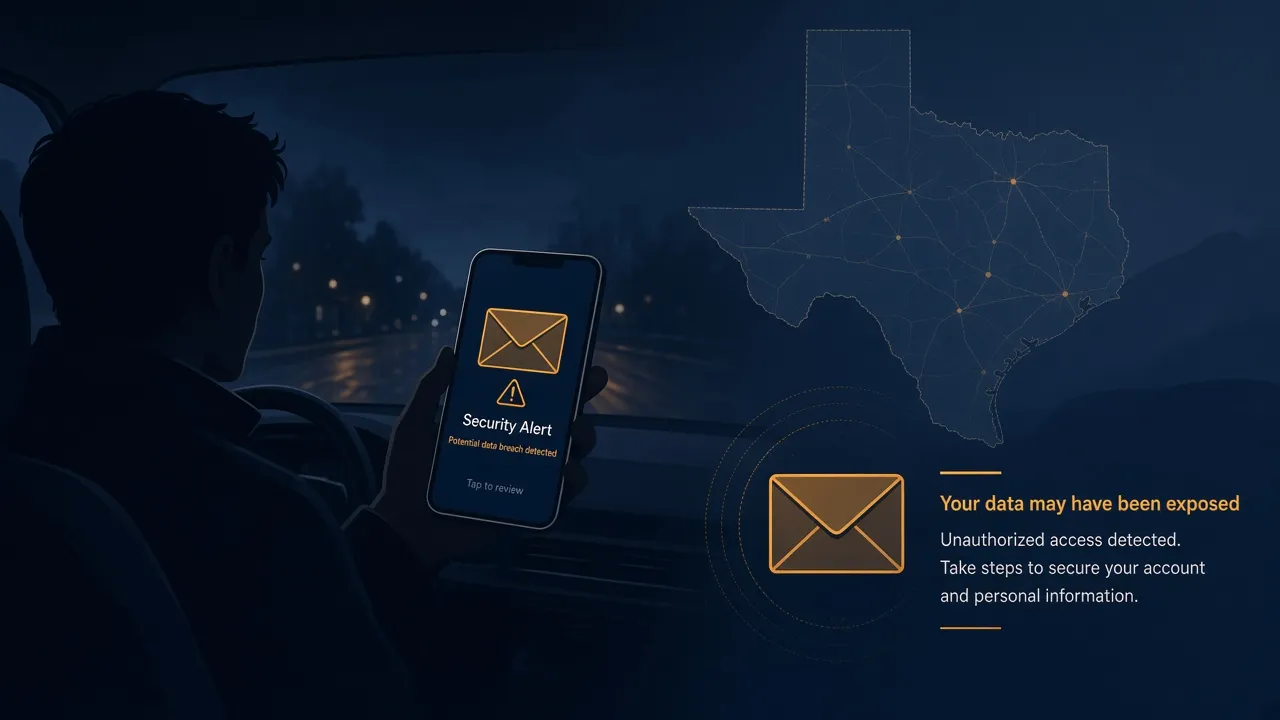
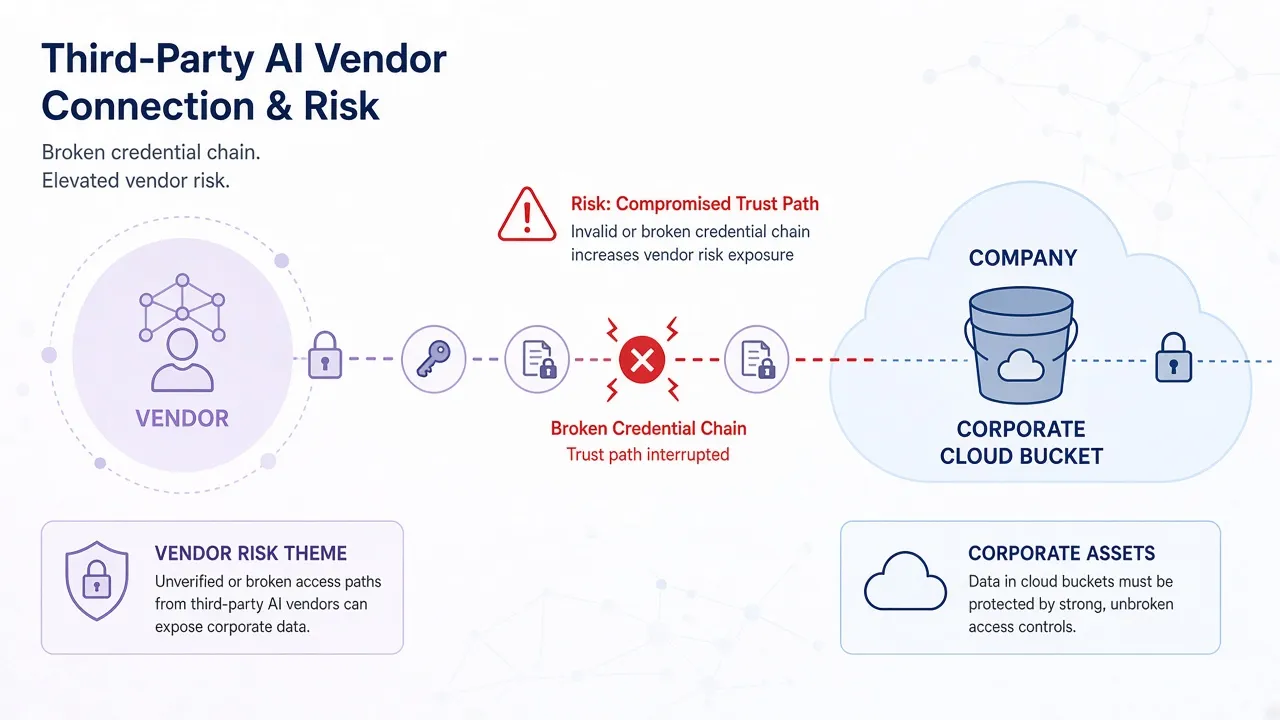
Yes — Uber Technologies, Inc. is notifying U.S. drivers that personal and driver-license information was exposed after attackers used compromised credentials at a third-party service provider to reach Uber-held data in that vendor’s environment.
Regulatory filings and trade press put the national total at 149,346 affected individuals (per state AG filings cited by TechCrunch and SecurityWeek). The Texas Attorney General lists 4,296 Texans on a report published November 13, 2026.
Uber’s breach notices reviewed by trade press do not name the vendor. TechCrunch reports that an Uber spokesperson identified the provider as Fireworks AI (fireworks.ai). Treat that name as TechCrunch’s attribution to a spokesperson, not as text from the Texas or California AG sample notices.
The angle for Texas drivers and small businesses: AI and SaaS vendors often hold copies of your customer or workforce data. When their staff credentials fail, your alerts may not fire because the thief uses valid API or console access — the same pattern Uber describes for its Fireworks-connected environment.
This post covers confirmed regulator and trade-press facts, EmailMeNow admin audits, website-tech, blacklist, lookalike, and CourtListener probes on November 17, 2026, plus YubiKey / Google Authenticator posture on published login paths.
Snapshot
| Field | Detail |
|---|---|
| Organization | Uber Technologies, Inc. (uber.com) |
| Vendor (public AG filings) | Unnamed third-party service provider |
| Vendor (TechCrunch / Uber spokesperson) | Fireworks AI (fireworks.ai) — secondary attribution |
| Uber notified by provider | October 9, 2026 (BleepingComputer) |
| Investigation finding date | October 13, 2026 (same) |
| Breach activity date (CA AG sample) | October 7, 2026 (California AG SB 24-632751) |
| U.S. total (state filings, trade press) | 149,346 (TechCrunch, SecurityWeek) |
| Texans affected (Texas OAG) | 4,296 — published 11/13/2026 |
| Texas data types (OAG) | Name, address, driver’s license, government ID, date of birth |
| Notice method (Texas OAG) | U.S. Mail; Email |
| Driver letters (trade press) | Mailed November 10, 2026 (BleepingComputer) |
What regulators and Uber say
Texas OAG (BR-0005510 family)
Repository Texas OAG structured data (synced with the public portal) matches the November 13 listing:
| Field | Value |
|---|---|
| Entity | Uber Technologies, Inc., 1725 3rd Street, San Francisco, CA 94158 |
| Texans affected | 4,296 |
| Consumer notice | Yes |
| Methods | U.S. Mail; Email |
| Information compromised | Name, address, driver’s license, government-issued ID, date of birth |
See the November 13 Texas breach roundup for the full batch context.
California AG
The California sample notice SB 24-632751 lists Uber Technologies, Inc. with breach date October 7, 2026. The public sample page does not reproduce the full data-type appendix in HTML; pair it with Texas OAG fields and customer letters described in trade press.
Uber timeline (from breach letters quoted in trade press)
Per BleepingComputer and SecurityWeek (November 16–17, 2026), citing Uber’s notifications:
- October 9, 2026: A service provider told Uber that an unauthorized party compromised the provider’s internal credentials and used them to access Uber’s account with that provider.
- Uber severed data connections with the provider and opened an investigation.
- October 13, 2026: Uber concluded the unauthorized party used those credentials to access Uber data connected to the provider (SecurityWeek notes use on October 7, 2026).
- Exposed data described in notices includes images of driver’s licenses and personal fields such as names, addresses, dates of birth, driver’s license numbers, and government-issued ID numbers (SecurityWeek).
Uber states the data sat in a cloud storage environment Uber created for the provider’s work, under Uber’s cloud security processes, but monitoring did not alert because the actor used valid credentials (SecurityWeek; The Record).
Uber says the compromised provider credentials did not grant access to other Uber systems and that it is offering credit monitoring and fraud assistance (SecurityWeek).
Fireworks AI (vendor breach chain)
Fireworks AI disclosed its own incidents in November 2026 trade coverage (for example BleepingComputer on the Fireworks breach). Fireworks has attributed activity to a financially motivated threat cluster linked to LLM hijacking (LLMjacking) campaigns (BleepingComputer).
SecurityWeek notes Fireworks initially reported limited impact, then in a November 9 update acknowledged effects on account, billing, some customer datasets, and incomplete models. That vendor timeline is separate from Uber’s October 7–13 driver-data finding — do not merge them into one sentence without citing each source.
Vendor naming rule for editors: Texas and California public samples reviewed here do not print “Fireworks.” Only cite Fireworks as the Uber vendor when you attribute TechCrunch’s Uber spokesperson reporting or Fireworks’ own advisories.
Why small businesses should mirror this vendor pattern
Gig platforms are extreme examples of high-volume contractor PII. The same architecture appears at smaller scales:
| Pattern | Risk |
|---|---|
| Fine-tune or RAG on customer support logs | Vendor copy becomes a breach copy |
| Shared object storage for a SaaS AI trial | One stolen dev credential = bulk download |
| Long-lived API keys in CI | Keys outlive people; rarely rotated after offboarding |
| Alerting on failed logins only | Valid credential misuse stays quiet |
NIST SP 800-161 and common vendor questionnaires still expect least privilege, break-glass, and contractual breach notice — but Uber’s letters illustrate that technical monitoring must include vendor-session anomalies, not only password sprays.
Independent domain audits (admin API)
We ran EmailMeNow admin scans on November 17, 2026 via GET https://audit.emailmenow.com/api/admin/scan?scope=full with bearer auth (not the public ?domain= form). 100% is the ideal overall domain-security score. 0 of 2 in-scope hosts reach it.
| Organization | Domain | Overall | Gap vs 100% |
|---|---|---|---|
| Uber | uber.com | 47% | −53 |
| Fireworks AI | fireworks.ai | 64% | −36 |
| Domain | Identity | Transport | Website |
|---|---|---|---|
| uber.com | 50% | 15% | 40% |
| fireworks.ai | 50% | 15% | 84% |
How to read this: Scores measure public email authentication, transport policy, and website headers on each primary domain. They do not prove or disprove the vendor credential theft. They do predict how convincingly an attacker can send fake breach follow-up mail during a real notice window. The familiar 15% transport gap is MTA-STS enforcement, not proof of inbox compromise.
Re-run any domain at audit.emailmenow.com (search the domain on the homepage — no bookmarked ?domain= links required).
Website stack note
Passive website-tech probe on November 17, 2026:
| Domain | Stack signal |
|---|---|
| uber.com | Undetected platform fingerprint; DigiCert TLS into February 2027 |
| fireworks.ai | Next.js; X-Powered-By exposes stack detail; Google Trust Services TLS into February 2027 |
Point-in-time only — stack fingerprint is not evidence about credential theft at the vendor.
MFA: driver SMS vs business authenticator paths
This breach involved vendor credentials, not driver passwords. MFA posture still matters for phishing and account recovery after a license-data leak.
Uber driver and delivery sign-in (consumer app)
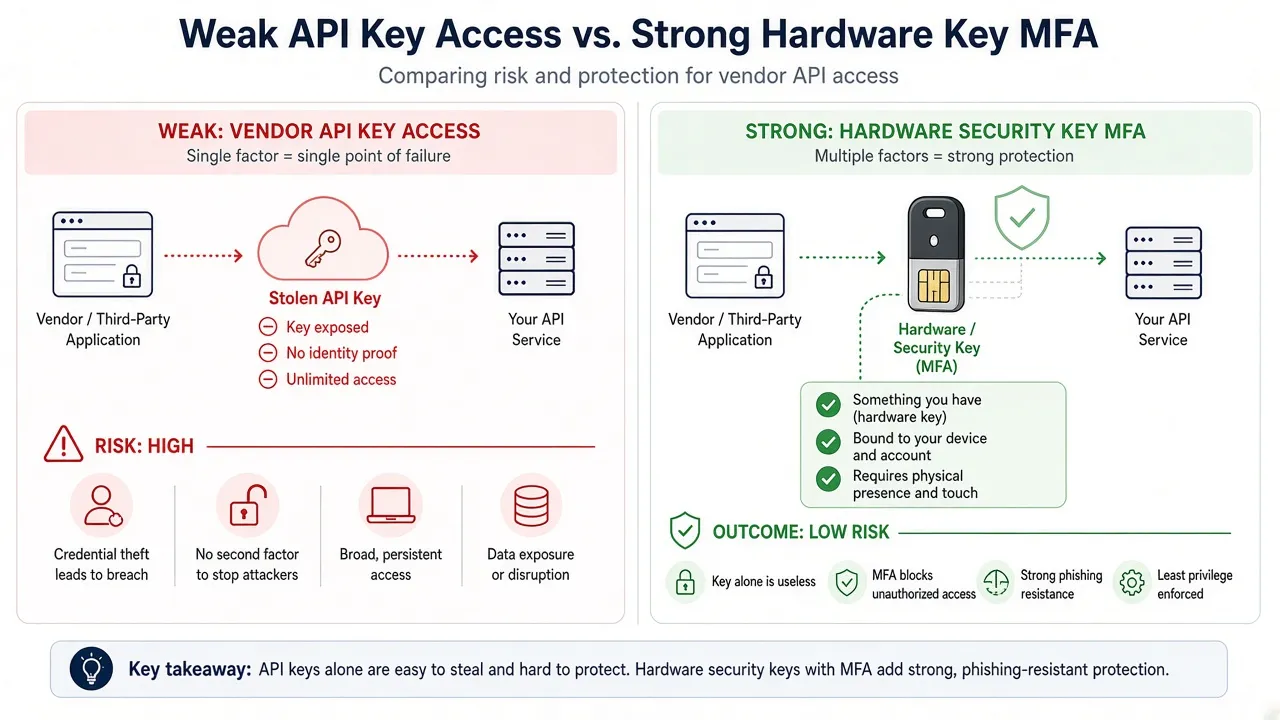
Uber’s driver 2-step verification help describes a 4-digit SMS code when signing in from a new device — not an always-on authenticator requirement.
| Account type | Documented second factor | YubiKey / FIDO2 | Google Authenticator / open TOTP |
|---|---|---|---|
| Uber driver app | SMS on new device | Not documented | Not documented |
| Uber rider account | Optional 2SV — SMS or security app | Not documented on rider path | Pass — rider help documents authenticator apps |
| Uber for Business admin | Authenticator app MFA | Not documented | Pass — docs recommend Google Authenticator / Duo |
Grade impact for drivers notified in this breach: treat workforce driver login as Fail under our directory rules (SMS-first, no published hardware key path). That does not explain the Fireworks credential incident; it does raise stakes for SIM-swap and bogus “re-verify your driver account” lures after a real notice.
Fireworks AI console
Fireworks SSO documentation describes Google SSO by default and enterprise OIDC/SAML with optional SSO enforcement. Public docs do not document a standalone YubiKey enrollment on the consumer login page. Enterprise customers may enforce FIDO or TOTP at the identity provider when SSO is mandatory — that is tenant configuration, not something this post attributes to Uber’s integration.
| Method | On published Fireworks login docs? |
|---|---|
| Google SSO | Yes (default) |
| Enterprise SAML/OIDC + enforce SSO | Yes (enterprise) |
| YubiKey on native fireworks.ai login | Not documented |
| Google Authenticator on native login | Not documented (use IdP MFA when SSO enforced) |
How we grade: Same rules as the MFA directory.
Recommended MFA tools (for your business mail and admin consoles)
| Product | Best for | Get it |
|---|---|---|
| YubiKey 5C NFC | USB-C laptops + NFC phones | Amazon |
| YubiKey 5 NFC | USB-A desktops + NFC phones | Amazon |
| Proton Pass | TOTP vault + passkeys where supported | Proton Pass |
We may earn a commission if you buy through the links above.
Blacklist, lookalikes, CourtListener
Email blacklist (public DoH, November 17, 2026): uber.com and fireworks.ai — clear (no mail/domain listings on checked DNSBLs). SPFBL / SpamRATS notes on CDN IPs are shared-infrastructure noise — not led in news copy.
DNS lookalike scan (November 17, 2026):
| Domain | To review | Owned redirects | BEC staging (MX) |
|---|---|---|---|
| uber.com | 55 | 3 (.ai, .app, .org) | 0 |
| fireworks.ai | 12 | 0 | 2 (fireworks.dev, fireworks.net) |
Highlights for Texas drivers during a notice window:
| Lookalike | Technique | Note |
|---|---|---|
ube.com | Omission | Registered — typo lure |
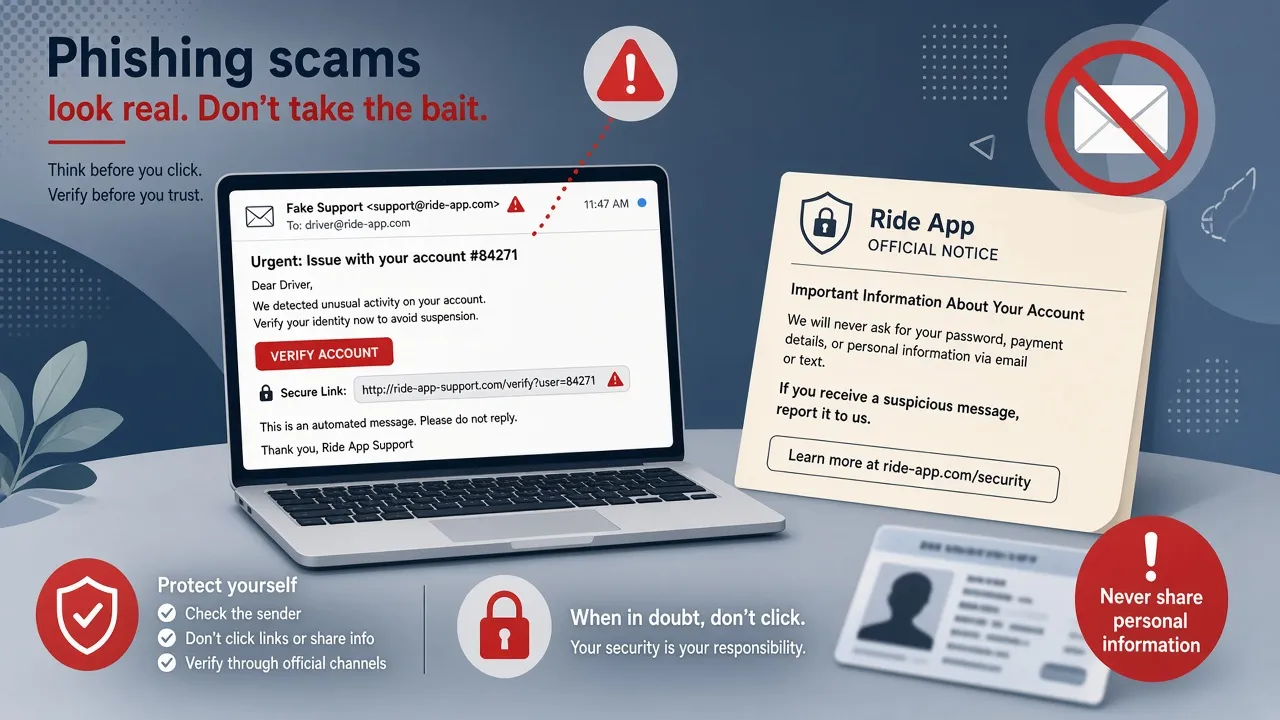
support-uber.com | Affix | Registered — support scam pattern |
ubee.com | Adjacent-key | Registered with MX |
fireworks.dev | TLD swap | BEC staging (MX) |
fireworks.net | TLD swap | BEC staging (MX) |
Type uber.com yourself for any portal link. Ignore SMS or email that claims to “activate monitoring” unless it matches the letter Uber mailed.
CourtListener
Texas federal search for "Uber Technologies" data breach on November 17, 2026 returned no RECAP breach complaint captions in TX districts. Unrelated hits (for example contract disputes) are not treated as breach class actions.
Fireworks search hit API rate limits during drafting — re-check before litigation updates.
What Texas drivers should do
If you received Uber’s breach letter or email:
- Activate credit monitoring only through contact paths in Uber’s notice — not through search ads, DMs, or unexpected texts.
- Place a credit freeze at Equifax, Experian, and TransUnion. Driver-license images plus DOB enable synthetic identity and account recovery fraud.
- Reject “re-upload your license” or “instant deposit verification” links that arrive outside the official Uber driver app workflow.
- Watch for 1099 / tax-prep phishing that references “Uber breach 2026.”
If you run a small business using AI vendors:
- Segment vendor access to the minimum dataset; delete vendor copies when trials end.
- Rotate API keys and SSO secrets after any vendor breach notification — assume parallel exposure.
- Require phishing-resistant MFA on your admin mail and cloud console, even when the vendor incident was elsewhere.
- Run a domain audit at audit.emailmenow.com and review automated monitoring options.
Related reading
- Texas OAG breaches — November 13, 2026
- Texas OAG YTD dashboard
- Heights Finance third-party cloud breach
- Baker Tilly third-party breach (Nov 2026)
- MFA directory — YubiKey, TOTP, passkeys
- Cybersquat Domain Monitoring
Sources: California AG SB 24-632751 · Texas OAG breach portal · Texas OAG structured export in this repo (data/texas-oag-breach-reports.json) · BleepingComputer Nov 17, 2026 · SecurityWeek Nov 16, 2026 · The Record · TechCrunch Nov 16, 2026 · Uber driver 2-step verification help · Uber for Business authenticator MFA · Fireworks SSO docs · EmailMeNow admin audits (scope=full) November 17, 2026 · website-tech, blacklist, and cybersquat probes November 17, 2026 · CourtListener November 17, 2026
Check your domain free at audit.emailmenow.com, or see automated reports and monitoring.