Yes — Russian state-sponsored cyber espionage group COLD RELIC (also tracked as Star Blizzard, Callisto, and Gossamer Bear; formerly COLDRIVER / UNC4057) turned data stolen in one U.S. organization’s late-2025 cloud breach into espionage phishing against a second U.S. organization in 2026, according to a November 17, 2026 case study from the Google Threat Intelligence Group (GTIG) and Mandiant.
GTIG does not name either victim organization and does not describe either as a law firm, CPA practice, or investment advisory. This post does not guess at identities, sectors, or domains beyond what GTIG and trade press publish. GTIG’s long-running target set includes government officials, defense contractors, and non-governmental organizations (NGOs) across Europe and North America — the trust and directory theft pattern still applies when a firm could be a downstream contact of someone already compromised.
Primary source: COLD RELIC: A Case Study in Impersonation and Compromise (GTIG, Nov 17, 2026).
For professional readers: staff directories, archived mail, and known-colleague trust become attack fuel when the first contact happens outside corporate email (GTIG does not name the messaging application). Push-based MFA on privileged accounts, uncontrolled device registration, and exact-domain spoofing on your sending domains still matter for follow-on mail impersonating your people after a breach elsewhere.
Snapshot
| Field | Detail |
|---|---|
| Threat actor | COLD RELIC — also Star Blizzard, Callisto, Gossamer Bear; formerly COLDRIVER / UNC4057 |
| Attribution (public) | U.S. DOJ indictment ties Callisto / Star Blizzard operators to Russia’s FSB (N.D. Cal. 3:23-cr-00447, indicted 2023-12-05); GTIG cites DOJ FSB assessment |
| Typical targets (GTIG) | Government officials, defense contractors, NGOs — high-value espionage, not commodity ransomware |
| GTIG publication | November 17, 2026 |
| Victim organizations | Two unnamed U.S.-based organizations — GTIG does not name them |
| Breach chain | Late-2025 cloud compromise → 2026 follow-on using stolen directory and relationship context |
| Initial access (org 1) | Stolen Super Admin credentials + U.S. residential proxy near the victim + MFA push fatigue |
| Persistence (org 1) | Passkeys, MFA backup codes, rogue MFA devices |
| Data theft & anti-forensics (org 1) | Customer Takeout, mass Drive export, Alert Center tampering |
| Follow-on (org 2) | Impersonation of an employee at the first victim on an encrypted messaging application + Entra ID credential/token phishing; new MFA device in SSO (no push-fatigue narrative for org 2 in GTIG) |
| Federation | Org 2 used Microsoft Entra ID as federated SSO into Google Workspace (per GTIG) |
| Victim names in sources | None — do not speculate |
Trade press on the same disclosure includes SecurityWeek (Nov 18, 2026), Dark Reading (Nov 18, 2026), and The Hacker News (Nov 18, 2026).
What GTIG says COLD RELIC did
Case study 1 — Late-2025 U.S. cloud tenant
Per GTIG and Mandiant incident response on the first unnamed U.S. organization:
- Geo-plausible access — Operators authenticated with a stolen Super Admin account through a residential proxy in the U.S. close to the victim’s geography, reducing “impossible travel” style alerts.
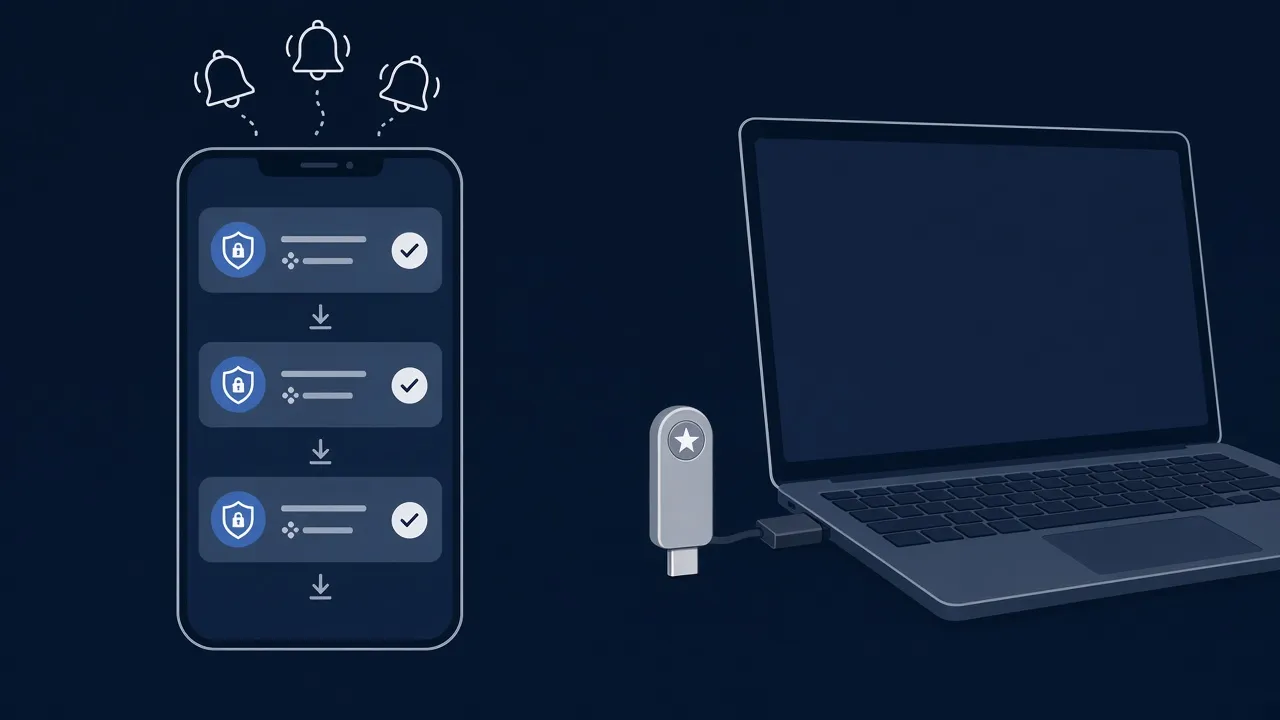
- MFA push fatigue — After repeated MFA challenges, the victim approved a push; attackers then registered a device model previously unseen in the tenant.
- Long-term persistence — COLD RELIC used passkeys, MFA backup codes, and additional rogue MFA devices, including reauthentication using unrevoked attacker-enrolled passkeys that persisted across password and session resets and bypassed device registration controls.
- Mass collection — With Super Admin rights, the group downloaded the organization’s cloud storage, exported employee lists, ran Google Workspace Customer Takeout (logged as
CUSTOMER_TAKEOUT_CREATED), and synced mail via OAuth to external clients. - Anti-forensics — GTIG says the group accessed the Admin Console, queried Admin security investigation and email audit logs to check defensive visibility, and viewed, modified, and deleted Alert Center notifications — including alerts tied to the intrusion.
- Post-eviction impersonation — After defenders removed access, GTIG observed email accounts impersonating employees of the victim used against internal staff and associates in the same professional circles.
Case study 2 — 2026 second U.S. organization
On the second unnamed U.S. organization:
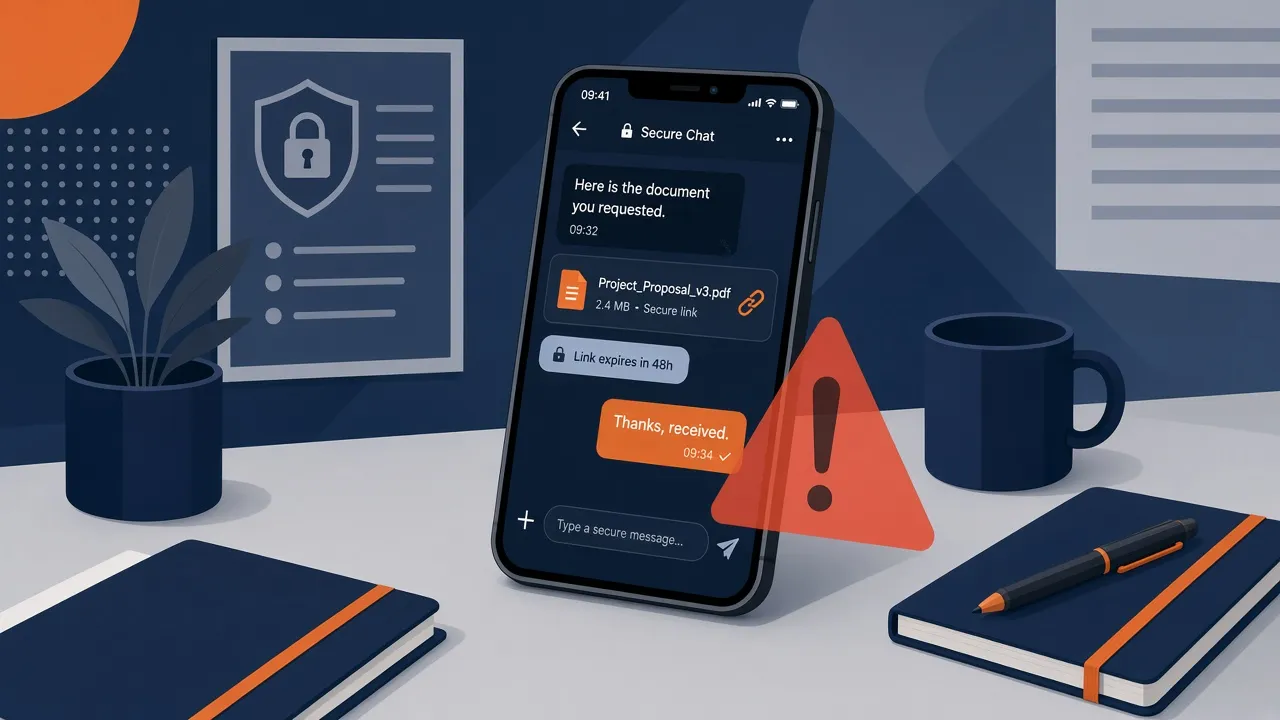
- COLD RELIC impersonated an employee of the first victim over an encrypted messaging application while building a believable thread (GTIG does not name the app).
- The actor shared phishing links crafted to steal Microsoft Entra ID credentials and tokens, with document lures matching the conversation topic (GTIG).
- GTIG correlated a COLD RELIC redirector URL submitted to VirusTotal in June 2026 whose query parameter referenced the first victim organization — indicating the follow-on was likely relationship-driven, not random spray.
- After authentication, COLD RELIC registered a new MFA device in the SSO solution and, with Entra ID as the federated SSO provider for Google Workspace, bulk-downloaded files from the compromised user’s cloud drive.
GTIG notes the threat actor later changed the messaging profile name to a new persona, likely to continue targeting others in the same professional circles.
Post-compromise pattern (both cases)
After initial access, GTIG describes aggressive collection plus targeted searches for credentials, personnel information, email archives (.pst), and documents useful for future spear-phishing — including organizational rosters, contact lists, resumes, and event schedules to build convincing pretexts.
Phishing infrastructure pattern
COLD RELIC often places the first link on a compromised third-party website that redirects to the real phishing host and fingerprints visitors. GTIG’s blog shows illustrative URL patterns such as ?file=<previous_victim_name> or ?ref=<lure_name> on a compromised site — not live victim URLs. Do not treat those examples as indicators for a named company.
Why law firms, CPAs, and RIAs should care
Professional services firms are relationship businesses. Opposing counsel, co-counsel, auditors, expert witnesses, and referral partners already appear in staff directories, event calendars, and threaded mail — the same categories COLD RELIC hunted in Case Study 1. GTIG’s case study is espionage, not a wire-fraud docket — but financially motivated business email compromise (BEC) crews use the same trusted-contact playbook when they already know your network.
| Risk | How this chain maps to your firm |
|---|---|
| Trusted-contact espionage phishing | A message from a conference or association contact on an out-of-band channel (GTIG does not name the app) bypasses most mail gateways |
| Wire and ACH fraud (criminal BEC) | Separate BEC actors use stolen archives and credential hunts for invoice and closing fraud — see Seventh Circuit cyber insurance BEC context |
| Push MFA on admin accounts | Super Admin + push MFA without FIDO2 or device-registration governance is how Case Study 1 escalated to tenant-wide export |
| Federated identity | Entra SSO into Workspace means one phished Entra user can surface Workspace cloud drive data even if Google-side controls looked adequate in isolation |
| Impersonation after a breach elsewhere | Enforce DMARC p=reject (with aligned SPF/DKIM) on domains you send from — that blocks exact-domain spoofing; monitor lookalike domain registrations of your firm’s name, and train staff to flag free-mail senders posing as your people |
Verify-the-channel playbook (no substitute for GTIG’s full hardening list):
- Callback on a known number — not the number in the chat thread — before clicking document links from colleagues you “already know.”
- Treat out-of-band doc shares like wire instructions: confirm through in-firm ticketing or verbal approval with a defined phrase.
- Never approve MFA pushes you did not initiate; report MFA fatigue patterns to IT the same hour.
- In at least one case GTIG observed, password resets without session revocation left COLD RELIC inside — after suspected compromise, revoke sessions, refresh tokens, OAuth grants, passkeys, backup codes, and rogue MFA devices, not password changes alone.
MFA: push fatigue vs phishing-resistant options
COLD RELIC’s Case Study 1 succeeded after MFA push notification fatigue; both cases involved rogue MFA device / passkey registration. GTIG recommends phishing-resistant MFA (FIDO2 / WebAuthn), restricting and auditing passkey enrollment, and administrator approval or out-of-band identity verification for new MFA devices.
Grades for workforce platforms below follow our MFA support directory:
| Grade | Meaning |
|---|---|
| Strong | Documented consumer or self-serve FIDO2 / FIDO security key (YubiKey-class) |
| Pass | Self-serve open TOTP without a documented security-key path |
| Partial | Better than SMS alone (passkeys, app push) but no open TOTP and no YubiKey |
| Fail | Documented second factor is primarily SMS / voice / phone OTP, or no enrollable MFA path is publicly documented |
| Platform (workforce) | Grade | YubiKey / FIDO2 | Google Authenticator / open TOTP |
|---|---|---|---|
| Google Workspace | Strong | Yes | Yes |
| Microsoft Entra ID / M365 | Strong | Yes | Yes |
Microsoft documents FIDO2 security keys and authenticator apps (Microsoft Learn — authentication methods). Google Workspace administrators can require security keys and Google Authenticator-class TOTP (Google Workspace — 2-Step Verification).
Number matching: Microsoft has enforced number matching for Microsoft Authenticator push approvals since 2023 (Microsoft — MFA number matching). That can reduce blind push approvals; it does not stop Entra ID credential and token theft on phishing pages — the path GTIG describes for Case Study 2. Prefer FIDO2 / WebAuthn (hardware keys or passkeys bound to origin) for admins and high-value users. GTIG’s detection table calls out MFA spam patterns (MITRE T1621).
Device registration: Both Google and Microsoft support policies that restrict who can enroll new MFA methods — align with GTIG’s guidance to require admin approval or out-of-band identity verification for new devices on privileged accounts at minimum.
Recommended MFA tools
| Product | Best for | Get it |
|---|---|---|
| YubiKey 5C NFC | USB-C laptops + NFC phones | Amazon |
| YubiKey 5 NFC | USB-A desktops + NFC phones | Amazon |
| Proton Pass | TOTP vault + passkeys where supported | Proton Pass |
We may earn a commission if you buy through the links above.
Protect your firm’s domain and name
COLD RELIC impersonated real employees and later mailed as those people. That is your firm’s brand and directory at risk.
- Run a baseline check on your sending domain at audit.emailmenow.com (100% is the ideal email-security score — most professional firms sit below it).
- Watch lookalike domain registrations — Cybersquat Domain Monitoring — and train staff to flag free-mail senders using a partner’s or colleague’s name.
- Keep DMARC at
p=rejectwith aligned SPF/DKIM on domains you actually send from — it defeats exact-domain spoofing, not every impersonation vector GTIG describes.
CourtListener — public litigation context (not GTIG’s victims)
Neither docket names the unnamed U.S. organizations in GTIG’s Nov 17, 2026 case study.
| Case | Court / docket | What it is |
|---|---|---|
| Microsoft Corporation v. John Does 1-2 | D.D.C. 1:24-cv-02719, filed 2024-09-24 | Civil Star Blizzard domain-seizure action by Microsoft and NGO-ISAC (Microsoft On the Issues, Oct 3, 2024). Default judgment and permanent injunction opinion dated 2026-08-05 — not the complaint filing date. |
| United States v. Peretyatko | N.D. Cal. 3:23-cr-00447, indicted 2023-12-05 | DOJ Callisto / Star Blizzard indictment alleging FSB-linked spear-phishing against U.S. government, defense, and related targets (DOJ indictment PDF). |
What GTIG recommends (condensed)
Identity and MFA (paraphrased themes from GTIG — see primary blog for full list):
- Replace SMS, voice, and push notifications with phishing-resistant MFA (FIDO2 / WebAuthn).
- Restrict and audit passkey and device registrations, especially for administrators.
- Harden MFA registration — require administrator approval or out-of-band identity verification to approve new MFA devices or secondary authenticators.
- In incident playbooks: revoke sessions, refresh tokens, OAuth grants, passkeys, backup codes, and rogue MFA devices — not password changes alone.
- Audit third-party OAuth grants — flag unexpected native desktop mail clients (e.g., Thunderbird) or external mail services (e.g., Proton Mail) (GTIG examples).
Network and data:
- Enrich auth logs with residential proxy / VPN reputation; alert on privileged-account ASN shifts.
- Deploy cross-cloud DLP for files matching password, roster, .pst, and similar patterns — COLD RELIC searched for these explicitly.
Detection opportunities in GTIG’s table include Customer Takeout Created, MFA fatigue patterns, Passkey enrolled after fatigue, Alert Center batch deletes, and directory user list download events.
Related reading
- FBI Kali365 Microsoft 365 OAuth phishing and MFA bypass patterns
- Google Calendar invite phishing (trust cues)
- MFA directory — YubiKey, TOTP, passkeys
- National law firm email security audit
- National CPA firm email security audit
Check your domain free at audit.emailmenow.com, or see automated reports and monitoring.
Sources: GTIG — COLD RELIC case study (Nov 17, 2026) · SecurityWeek (Nov 18, 2026) · Dark Reading (Nov 18, 2026) · The Hacker News (Nov 18, 2026) · Microsoft Learn — authentication methods · Microsoft — MFA number matching · Google Workspace — 2-Step Verification · Microsoft v. John Does — D.D.C. docket 1:24-cv-02719 · Default judgment opinion 2026-08-05 · United States v. Peretyatko — N.D. Cal. 3:23-cr-00447 · DOJ indictment (Dec 5, 2023) · CourtListener November 19, 2026