Connecticut’s Office of Consumer Counsel (OCC) filed a report with the Public Utilities Regulatory Authority (PURA) on November 13, 2026, saying Eversource Energy did not detect a spring 2026 cyberattack for 13 days while an intruder copied files from the company’s Microsoft cloud storage — until the attacker emailed Eversource from a compromised employee account. The Consumer Counsel wants shareholders, not ratepayers, to pay for an independent cybersecurity audit and asks regulators to weigh the incident in Eversource’s pending electric distribution rate case (OCC news release).
The Google Discover headline you may have seen (screenshot context) was attributed to the Hartford Courant in some feeds. At draft time we could not independently open a distinct courant.com article URL with the same body. We verified the 13-day detection gap, April 27 attacker alert, 2,592 Connecticut residents in financial hardship programs, and 3.6 million+ file accesses against the OCC release, Hartford Business Journal (November 13, 2026), Eversource’s May 22, 2026 corporate notice, and the Vermont Attorney General security-breach notices list (May 21, 2026 filing row for Eversource Energy).
This is a utility customer PII story on corporate IT, not a report that electric, gas, or water delivery was interrupted. Eversource’s May 22 statement says there was no impact to service and no intrusion into customer information systems — we repeat only what the company published, not speculation about grid control systems.
Snapshot
| Field | Detail |
|---|---|
| Regulator action | OCC report to PURA · Nov 13, 2026 · Docket 26-04-06 |
| First compromise | April 14, 2026 — smishing link to fake login; employee entered password + verification code (HBJ, citing Eversource PURA incident filing) |
| Undetected copying | 13 days before Eversource learned of copying (OCC) |
| Company learned | April 27, 2026 — attacker emailed from compromised account (~10:15 a.m. per HBJ) |
| File volume | More than 3.6 million company files accessed April 14–30 (OCC) |
| CT residents in hardship programs | 2,592 (OCC) |
| Eversource multi-state notice pool | ~3,049 former or current customers or household members (Eversource May 22 notice) |
| Employee / public notice | May 22, 2026 (Eversource) |
| Affected customer letters | May 27, 2026 (OCC; HBJ) |
| Monitoring enrollment | 156 of 2,592 (~6%) before Aug 27, 2026 deadline (OCC) |
| Unconfirmed | Threat-actor name, ransomware crew, SEC Item 1.05 8-K dedicated to this incident — not found in sources we read |
Do not conflate OCC’s 2,592 Connecticut hardship-program ratepayers with Eversource’s broader ~3,049 three-state notice population in the May 22 release — both are documented, but they measure different scopes.
What regulators and reporting say happened
Per OCC, Hartford Business Journal (Andrew Larson, November 13, 2026), and Eversource disclosures described to PURA:
- April 14 — An employee received a text message with a link to what looked like a company login page, then entered a username, password, and verification code on the fake page (HBJ, citing Eversource’s PURA incident report).
- April 14–27 — The attacker copied files from Microsoft cloud storage without Eversource detecting the activity for 13 days (OCC).
- April 27 — The attacker used the compromised mailbox to send two emails and a Microsoft Teams message claiming to hold company files and executive mail; Eversource locked the account within minutes (HBJ).
- April 17–30 — A second employee account was compromised April 17 but not discovered until April 30; copying continued through it (OCC; HBJ).
- May 5–6 — Voice phishing hit third and fourth employees (HBJ). Eversource says no customer data was taken through those accounts in its PURA narrative as summarized by HBJ.
- May 22 / May 27 — Workforce communication and mailed customer notices (Eversource; OCC).
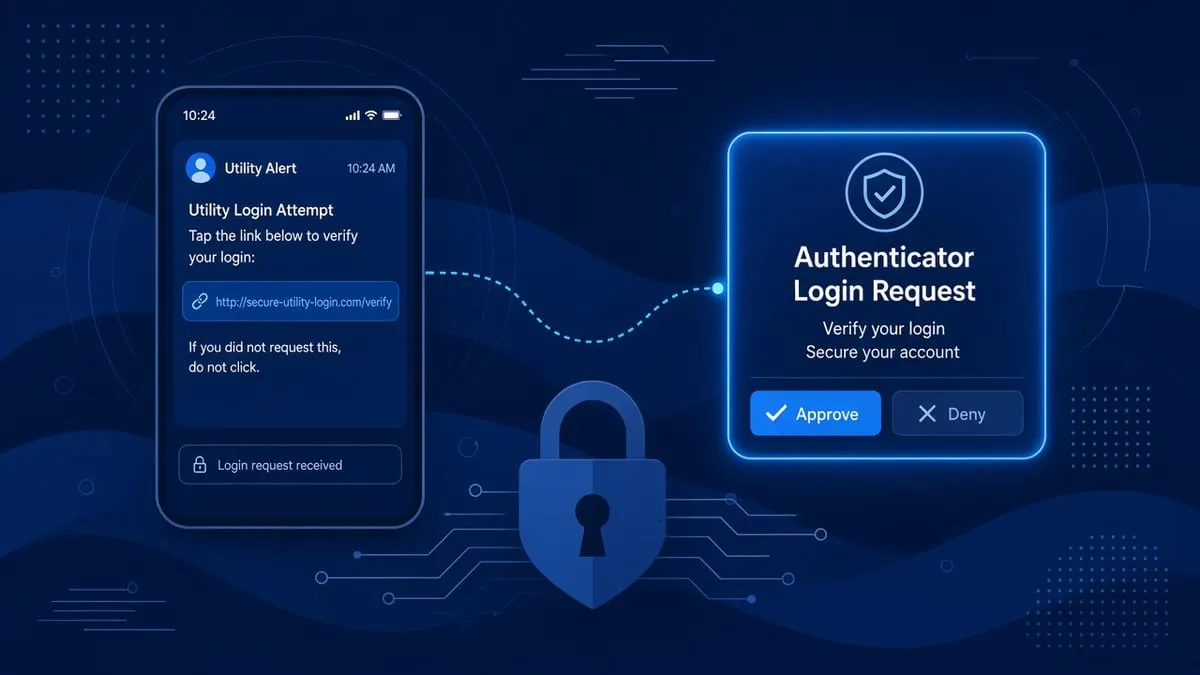
OCC’s November 13 release says significant questions remain about how the attacker obtained employee contact information and triggered a valid Microsoft Authenticator notification — we treat that as an open investigative question, not a confirmed MFA bypass technique.
Data at risk (verified categories)
| Source | Who | Data types named |
|---|---|---|
| OCC (Nov 13) | 2,592 CT financial hardship ratepayers | Tax returns, bank statements, paycheck stubs, SSNs, government benefits information |
| Eversource (May 22) | ~3,049 customers / household members (tri-state notice) | Names, addresses, account info, phone, email; may include SSNs, IDs, financial account numbers |
Consumer Counsel vs company framing
- OCC — Managerial competence and customer concern were “neither … evident”; customers waited about a month after April 27 awareness for letters (OCC release).
- Eversource (May 22) — Describes a “relatively narrow incursion” that did not reach customer information systems; offers two-year complimentary credit monitoring (corporate notice).
- Eversource (Nov 13, via HBJ) — Spokesperson Tricia Taskey Modifica said the company has “stringent policies” and has been in contact with regulators and law enforcement (HBJ).
Who should act
If you received an Eversource breach letter (May 2026 window):
- Enroll in monitoring only through the instructions in your mailed notice — not a link from a new text or call.
- Place credit freezes at Equifax, Experian, and TransUnion when SSNs were involved.
- File taxes early and request an IRS Identity Protection PIN when eligible.
- Report suspected identity theft at IdentityTheft.gov.
If you run IT for a utility, municipality, or hardship-program vendor:
- Require phishing-resistant MFA on every path that can reach SharePoint / OneDrive containing customer PII.
- Alert on bulk cloud downloads and impossible-travel admin sessions lasting days, not only malware signals.
- Run DMARC
p=rejecton customer-facing domains before the next wave of fake “assistance program” or credit-monitoring mail.
MFA: YubiKey and Google Authenticator
OCC’s report flags a valid Microsoft Authenticator push in the April 14 entry path (OCC). That is why SMS plus TOTP alone is fragile when employees can type a captured code into a reverse-proxy phishing page. Grades follow our MFA directory.
| Grade | Meaning |
|---|---|
| Fail | SMS / voice / email OTP only — or no public path |
| Pass | Self-serve Google Authenticator-style open TOTP |
| Strong | FIDO2 / YubiKey-class security key for sign-in |
| Platform | Grade | YubiKey | Authenticator |
|---|---|---|---|
| Microsoft 365 / Entra ID | Strong | Yes | Yes |
| Google Account / Workspace | Strong | Yes | Yes |
| Login.gov (federal comparison) | Strong | Yes | Yes |
| Eversource My Account (consumer) | Unverified | Not documented in this post | Not documented in this post |
Microsoft documents FIDO2 security keys and authenticator apps for work accounts (Microsoft — authentication methods). We did not independently document Eversource consumer My Account MFA options for this draft — treat utility bill-pay and assistance-program portals separately from employee Entra ID.
Recommended MFA tools
| Product | Best for | Get it |
|---|---|---|
| YubiKey 5C NFC | USB-C laptops + NFC phones | Amazon |
| YubiKey 5 NFC | USB-A desktops + NFC phones | Amazon |
| Proton Pass | Passkeys + authenticator-style TOTP | Proton Pass |
We may earn a commission if you buy a YubiKey or sign up for Proton Pass through the links above.
Independent cybersecurity audits
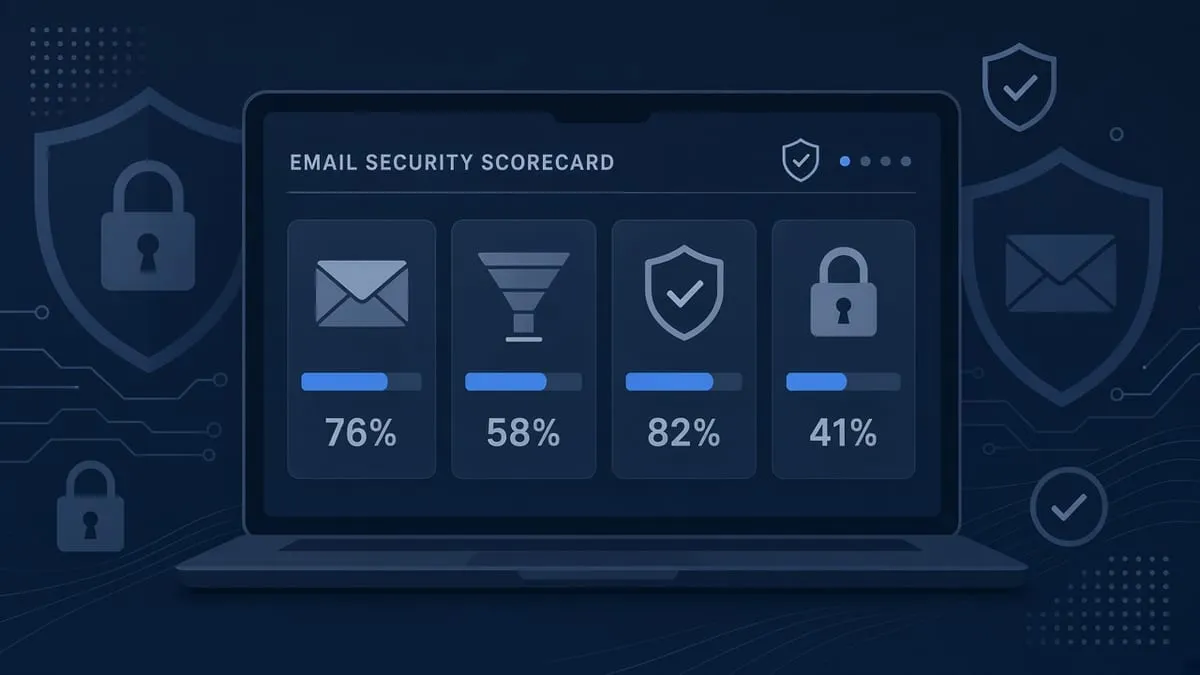
We read existing EmailMeNow audit report HTML for eversource.com on November 15, 2026 using the repo helper auditDomainDetailed(domain, { fresh: false }) — no fresh=1 query flag and no POST /start. 100% is the ideal — eversource.com does not reach it. These scores are public email / transport / website posture. They do not prove or disprove the April incident.
| Organization | Domain | Overall | vs 100% |
|---|---|---|---|
| Eversource Energy | eversource.com | 52% | −48 |
| Domain | Identity | Transport | Website |
|---|---|---|---|
| eversource.com | 50% | 15% | 37% |
How to read this: 15% Transport is the familiar MTA-STS enforcement gap pattern we document on other Fortune 500 utilities — relevant when breach-notification and assistance-program mail is in the mailstream.
Self-check links (do not trigger our draft-environment fresh scans): eversource.com
Website stack note
Passive website-tech probe on November 15, 2026 (node scripts/probe-website-tech.mjs eversource.com --for-news):
| Domain | Stack signal |
|---|---|
| eversource.com | ASP.NET (X-Powered-By); TLS DigiCert into 2027-05-08 |
Point-in-time only. Stack fingerprint is not proof of the April cloud-storage incident.
Blacklist and lookalike domains
Email blacklist check (public DoH, November 15, 2026): eversource.com clear (0 mail/domain hits on checked lists). SPFBL on a web/CDN IP is shared-infrastructure noise — not led.
DNS lookalike scan (BEC profile, registered signals only):
| Brand scanned | To review | BEC staging |
|---|---|---|
| eversource.com | 56 | 1 |
Selected registered names (investigate; not proof this breach used them):
| Lookalike | Technique | Signals |
|---|---|---|
| versource.com | omission | BEC staging (MX) |
| ever-source.com | hyphenation | NS, A, MX |
| eversource.app | tld-swap | NS, A, AAAA, MX |
Type eversource.com yourself. Continuous monitoring: Cybersquat Domain Monitoring.
Related coverage
- Fortune 500 utilities email security
- Minnesota water utilities OT cyberattack
- STP Nuclear AG breach notice
- MFA support directory
- Connecticut law firms email security
- IBM Cost of a Data Breach 2026
Check your domain free at audit.emailmenow.com, or see automated reports and monitoring.
Sources: OCC — independent audit call (Nov 13, 2026) · Hartford Business Journal (Nov 13, 2026) · Eversource — phishing notice (May 22, 2026) · Vermont AG breach notices index (May 21, 2026 row) · Connecticut AG breach reporting guidance. Independent EmailMeNow cached audit parse, website-tech, blacklist, and cybersquat probes November 15, 2026. CourtListener skipped (API/search returned auth/method errors in this environment). Hartford Courant distinct article URL not verified at draft time — core counts cross-checked to OCC + HBJ + Eversource notice.