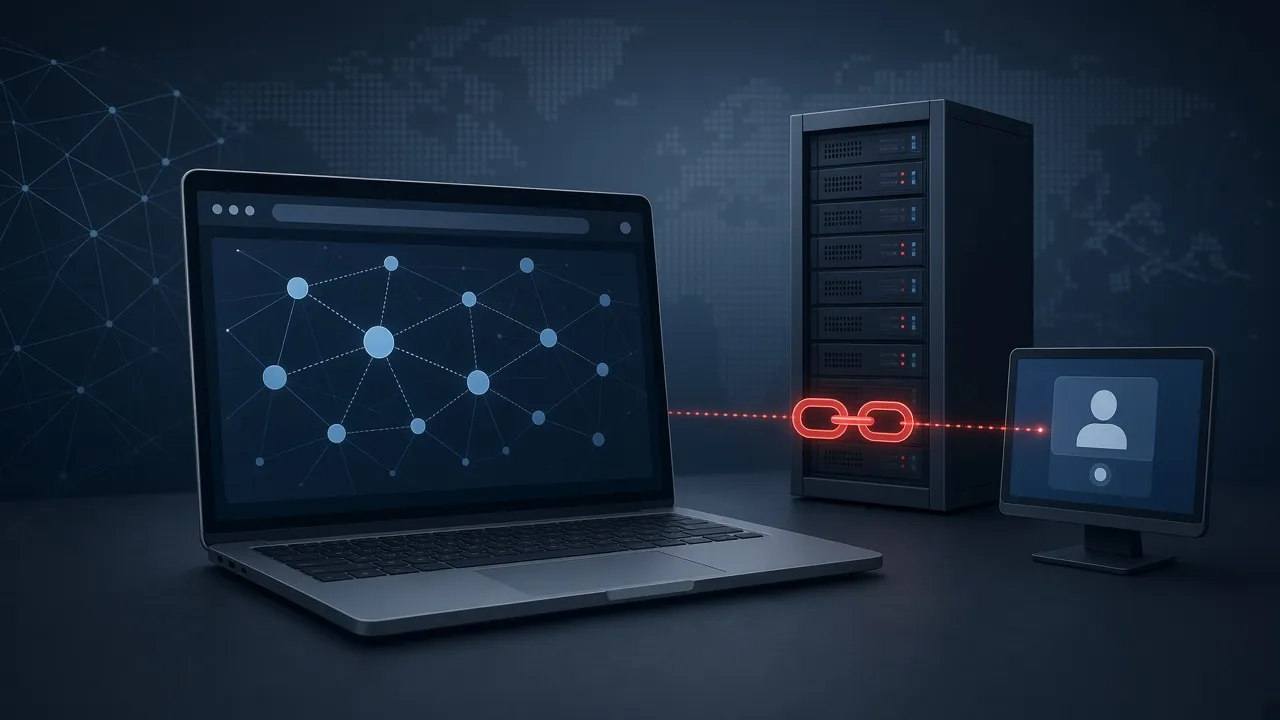
On 16 November 2026, malicious JavaScript reached visitors of 178 organisations through Optimizely Web Experimentation — a third-party A/B testing and personalisation platform whose snippets load from cdn.optimizely.com. Report URI (Scott Helme) says 188 infected snippets were found across those organisations, including Zoom, the BBC, CNN, HSBC (multiple regional properties), Salesforce, GitLab, and IKEA.
This was not a traditional “download malware from a news site” event for most visitors. Affected pages could run attacker-controlled script in the browser that attempted cryptocurrency address swaps, payment-card skimming on on-page forms, cookie and screenshot theft, and — on some iPhones and iPads — delivery of iOS exploit-kit chains researchers label Coruna and DarkSword. Optimizely’s customer report (17 November 2026, revised 18 November 2026) describes exposure through visitor browsers, not customer corporate networks, and says hosted payment iframes (for example Stripe or Adyen) were out of the script’s reach. Optimizely also states that its PCI snippet host (cdn-pci.optimizely.com) was part of the delivery path for injected script, while hosted Stripe and Adyen iframes still could not be read by the skimmer (same PDF; Report URI).
Texas tie: none in the primary sources reviewed. This post is a national vendor-risk and visitor-hygiene story for small businesses that embed marketing, analytics, or experimentation tags — and for staff who browse major news and SaaS sites during the workday.
Snapshot
| Field | Detail |
|---|---|
| Product | Optimizely Web Experimentation only (Optimizely advisory) |
| Attack vector | Flaw in the Web Experimentation account signup flow used to impersonate administrator users and write to Project JavaScript (Optimizely PDF) |
| First malicious write (Optimizely) | 16 November 2026, 07:51 UTC (Optimizely PDF) |
| Earliest researcher observation (BBC snippet) | 04:21 UTC (Report URI) |
| Vendor containment | Detected 13:34 UTC · Cloudflare known-pattern block 16:06 UTC · vulnerability closed 16:10 UTC · injected code removed 22:24 UTC (Optimizely PDF) |
| Researcher scope | 188 infected snippets · 178 organisations (Report URI, 16 November 2026) |
| Exposure window to review | Report URI 04:21 UTC (earliest BBC injection seen) through Optimizely 22:24 UTC removal; per-site windows can start earlier than Optimizely’s 07:51 UTC first-write timestamp |
| Payload host (defanged) | 1688360[.]cc/track.js plus related domains listed in Report URI and Optimizely section 10 IoCs |
| Verified crypto inflow | Report URI cites on-chain receipts of roughly $7,040 within the 16 November campaign window — not a measure of total card or cookie loss |
What Optimizely and researchers agree on
Optimizely told BleepingComputer (16 November 2026) that an unauthorized party exploited the Experimentation account signup flow, injected malicious JavaScript into some customer projects, blocked the vulnerable path, removed injected code, and revoked sessions for affected accounts. Optimizely’s customer PDF records a 16:06 UTC Cloudflare block on malicious outbound code using known patterns, with delivery fully blocked per that timeline.
Report URI’s technical post explains the mechanism: each customer loads a snippet from Optimizely’s CDN. The attacker altered projectJS — optional per-project code — while the file still carried Optimizely’s TLS certificate and hostname. That is a JavaScript supply-chain change, not CDN cache poisoning as described by Helme. Optimizely’s own www.optimizely.com and login.optimizely.com snippets were among those modified.
Loader variants included a plain script tag to 1688360[.]cc, Base64-hidden URLs, and an inline fallback that could run through eval when the remote host was blocked — a detail Report URI ties to 'unsafe-eval' in some customer Content Security Policy configurations.
Named brands: what sources support
Report URI lists BBC, CNN, Zoom, and HSBC. Malwarebytes (17 November 2026) names BBC, CNN, and Zoom and points to Report URI’s full list.
| Brand | Researcher finding | Public company statement (where available) |
|---|---|---|
| BBC | Snippet timeline: last clean capture 02:21 UTC; first injection 04:21 UTC; track.js on bbc.com from 08:28 UTC (Report URI) | No BBC-specific statement cited in Reuters/BleepingComputer roundups reviewed |
| CNN | cnn.com / edition.cnn.com listed among infected properties (Report URI); BleepingComputer cites urlscan evidence | Reuters (16 November 2026) says CNN did not immediately respond |
| Zoom | zoom.us / www.zoom.com listed; snippet Last-Modified ~11:20 UTC (Report URI) | Reuters: aware of incident; disabled Optimizely in production as precaution; no customer-data impact identified yet |
| HSBC | Multiple HSBC hosts (for example www.us.hsbc.com, regional banking sites) in Report URI’s finance bucket; Report URI found HSBC’s CSP blocked track.js and data exfiltration while an inline fallback copy still ran (Report URI) | Reuters: HSBC said unauthorised scripts were not active on its websites |
Framing: Listing a domain in Report URI means malicious Optimizely project code could run in browsers during the exposure window — not that each visitor was exploited, that every page on the domain was affected, or that the organisation’s servers were breached.

If you only visited affected sites (practical steps)
Time to review (UTC, 16 November 2026): From Report URI’s 04:21 UTC BBC snippet injection observation through Optimizely’s 22:24 UTC project cleanup. Individual sites may have been affected before Optimizely’s 07:51 UTC first-write timestamp — use each brand’s status page if you need a narrower window.
| Step | Why |
|---|---|
| Install iOS/iPadOS updates | Report URI documents Coruna / DarkSword branches aimed at older iOS versions; keep devices current |
| Review crypto transfers on 16 Nov | Script swapped wallet addresses in page text, forms, clipboard, and some navigation paths (Report URI) |
| Watch card activity if you typed PAN/CVV into a site’s own form (not a hosted checkout iframe) from 13:43 UTC until removal | Skimmer added to track.js 13:43 UTC per Report URI timeline |
| Sign out and back in on sensitive accounts you had open in the same browser session | Non-HttpOnly cookies could be copied; treat as hygiene, not proof of compromise |
| Ignore “Optimizely breach” download links | Follow-up phishing often mimics vendor incident mail — verify through official status pages only |
| Use browser isolation for high-risk browsing | Separate profile or device for banking and admin work |
Do not expect a desktop .exe from CNN or the BBC in this incident narrative. Risk was in-browser script — and, on vulnerable iOS builds, attempted exploit-kit delivery.
Small-business takeaway: third-party script inventory
Your marketing site can be safe on the server and still harm customers when a vendor snippet turns hostile.
| Control | Action |
|---|---|
| Inventory | List every third-party <script> on checkout, login, and account pages — tag managers, A/B tools, chat, analytics |
| CSP | Enforce Content-Security-Policy with tight script-src and connect-src; Report URI crawled 256 hosts; 24 organisations blocked the payload. 'strict-dynamic' trusts scripts the Optimizely snippet inserts, so the remote loader still runs. 'unsafe-eval' or 'unsafe-inline' lets the inline fallback run when the remote host is denied. At HSBC, track.js and data theft were blocked and the inline copy still ran (Report URI) |
| Subresource Integrity | Use SRI where scripts are static; most experimentation snippets are dynamic — pair SRI with CSP and change detection instead |
| Scope reduction | Remove experimentation snippets from payment and wallet flows; Optimizely’s post-incident guidance discusses keeping snippets off sensitive inputs |
| PCI DSS 4.0 | Since the March 2025 SAQ A revision and FAQ 1588, Req. 6.4.3 and 11.6.1 are not automatic SAQ A line items when checkout is an embedded processor iframe — but SAQ A merchants must still confirm the parent page is not susceptible to script attacks (merchant-deployed controls like those in 6.4.3 / 11.6.1, or the processor’s written confirmation when you implement per their instructions). Redirect-only checkout is a separate eligibility path. Parent-page tags like Optimizely can still matter for crypto, cookies, and any PAN typed outside the iframe |
| Vendor monitoring | Subscribe to vendor status/RSS; tools that hash third-party JS (Report URI, CSP reports, RUM) catch silent changes faster |
Sibling supply-chain posts: FBI ARTEX / ConnectWise chain · Chameleon SEO bank phishing.
Email-security follow-on
Incident-themed lures may cite BBC, Zoom, banking, or “supply chain” language. Your firm’s SPF/DMARC/TLS posture does not stop a forged story body.
Rotate expectations for staff: no attachment claiming to be an Optimizely patch; confirm any experimentation pause through your internal web team and Optimizely’s status page — not a cold email link.
Check your domain free at audit.emailmenow.com. Weekly mail-authentication drift checks: Domain Watch ($29/mo). Deeper reporting: services ($99 report tier).
Independent domain audits
19 November 2026 admin scans (100% is the ideal). These scores reflect email and website security on marketing domains, not whether an Optimizely snippet was infected on 16 November.
| Organization | Domain | Overall | vs 100% |
|---|---|---|---|
| Optimizely | optimizely.com | 73% | −27 |
| CNN | cnn.com | 64% | −36 |
| Zoom | zoom.us | 54% | −46 |
| BBC | bbc.com | 53% | −47 |
| HSBC | hsbc.com | 51% | −49 |
| Domain | Identity | Transport | Website |
|---|---|---|---|
| optimizely.com | 65% | 45% | 84% |
| cnn.com | 65% | 15% | 65% |
| zoom.us | 65% | 15% | 37% |
| bbc.com | 60% | 15% | 43% |
| hsbc.com | 60% | 15% | 37% |
0/5 domains reached 100%. Low transport scores are common on large media and SaaS brands (MTA-STS / TLS-RPT gaps) — relevant when fake “security bulletin” email impersonates the same names.
Website stack, blacklist, and lookalikes
Probes run 19 November 2026 (probe-website-tech.mjs --deep --fresh --for-news, probe-blacklist.mjs --for-news, probe-cybersquat.mjs --bec --for-news).
| Domain | Website-tech note | Blacklist | BEC staging (lookalike) |
|---|---|---|---|
| bbc.com | Next.js; TLS via CT ~2027-04-06 | UCE L3 on shared Mimecast MX — not led | 3 (for example bbbc.com, bnc.com) |
| cnn.com | Stack undetected; TLS ~2027-06-01 | Clear (CDN SPFBL noise only) | 1 (cnn.io) |
| zoom.us | Stack undetected; TLS ~2027-05-31 | Clear | 0 |
| hsbc.com | ASP.NET; TLS ~2027-05-13 | Clear | 2 (secure-hsbc.com, nsbc.com) |
| optimizely.com | Next.js; TLS ~2027-02-14 | Clear | 1 (optimizey.com) |
Cybersquat monitoring: Cybersquat Domain Monitoring.
CourtListener REST search Optimizely skimming with filed_after=2026-11-16 returned 0 federal docket hits (19 November 2026) — expected for a fresh vendor incident, not a named civil filing at publish time.
MFA after cookies or session data may have leaked
Browser script could copy document.cookie values not marked HttpOnly. MFA on your next login still matters — especially for email, banking, and SaaS admin accounts.
| Grade | Meaning |
|---|---|
| Strong | FIDO2 / YubiKey-class key and open TOTP documented |
| Pass | TOTP or FIDO2 documented; SMS-only or proprietary tokens may remain |
| Fail | No documented YubiKey-class or open Google Authenticator–style TOTP on the login reviewed |
| Account | Grade | YubiKey | Authenticator |
|---|---|---|---|
| Zoom account (workforce / consumer) | Pass | Not documented for consumer FIDO2 / security-key sign-in (passkeys: KB0083521) | Yes — Google / Microsoft Authenticator via two-step verification |
| HSBC US digital banking | Fail | Not documented | Not documented — proprietary Digital Security Device in the HSBC Mobile Banking app (HSBC US security device) |
| CNN account | Fail | Not documented | Not documented |
| Optimizely Experimentation login | Pass | Not documented on classic profile 2-step | Yes — Google Authenticator named |
| Google Account (personal / Workspace) | Strong | Yes | Yes — passkeys + Authenticator |
Directory: MFA support directory.
Recommended MFA tools
| Product | Best for | Get it |
|---|---|---|
| YubiKey 5C NFC | USB-C laptops + NFC phones | Amazon |
| YubiKey 5 NFC | USB-A desktops + NFC phones | Amazon |
| Proton Pass | Passkeys + authenticator-style TOTP | Proton Pass |
We may earn a commission if you buy a YubiKey or sign up for Proton Pass through the links above.
Related coverage
- Zoom Windows CVE-2026-53412 — separate Zoom client flaw, not this Optimizely event
- MFA support directory
Sources: Report URI — Optimizely incident · Scott Helme reflection (17 November 2026) · Optimizely customer PDF · Optimizely support advisory · BleepingComputer · Malwarebytes · Reuters via Investing.com · Ars Technica · PCI SSC FAQ 1588 / SAQ A scripts · Zoom two-step verification · HSBC US security device · Optimizely 2-step verification. Domain audits via admin GET /api/admin/scan?scope=full 19 November 2026; website-tech, blacklist, cybersquat, and CourtListener probes 19 November 2026.
Check your domain free at audit.emailmenow.com, add Domain Watch ($29/mo) for weekly mail-authentication drift checks, or see automated reports and monitoring.