On October 28, 2026, WIRED reported that transparency nonprofit Distributed Denial of Secrets (DDoSecrets) published an archive it calls “Icepick.” DDoSecrets said in a press release that the material reportedly came from the Department of Homeland Security’s Okta single sign-on environment—a workforce directory, not a password dump. WIRED, TechCrunch, the BBC, and Nextgov/FCW describe more than 41,000 DHS employees and contractors with work contact fields (business email, phone numbers, office locations) and permission-group metadata naming internal apps and programs—categories such as AI assistants, messaging, and investigative platforms, without us repeating any group roster here.
Hacktivists using the handle Department of Peace claimed credit; DDoSecrets and researcher maia arson crimew previewed the material for reporters. We do not link to, quote, or reproduce any row from Icepick or DDoSecrets. Treat every field as alleged until your own counsel and IR team say otherwise.
Okta told WIRED: “We are aware of this report. Okta is secure, and we have no evidence our data or systems were compromised.” That is not the same as “DHS was not breached.” A stolen admin session, over-broad API token, or misconfigured integration inside one customer tenant can export a directory without compromising Okta’s cloud. Do not tell staff or clients that “Okta was hacked.”
A DHS spokesperson told WIRED the department is “aware of a potential breach” and working to address it. Alexander Leslie of threat-intelligence firm Recorded Future warned WIRED that, if authentic and current, the directory becomes far more dangerous when correlated with other breach or commercial data—fuel for impersonation, social engineering, and compromise of ongoing investigations. TechCrunch (Oct 29) reported takedown pressure and platforms blocking links to searchable copies; that does not remove the risk that copies already circulate.
For Texas small businesses, law firms, RIAs, and local governments that run on Okta, Microsoft Entra ID, or Google Workspace SSO, the lesson is blunt: your identity provider’s user directory is an org chart, phone book, and app map in one file. When it leaks, attackers get a spear-phishing target list—vishing, fake help-desk callbacks, MFA fatigue, and SIM-swap prep included. See our June 2026 federal agency scoreboard for an older dhs.gov snapshot (71% overall then); today’s fresh audits are below.
Snapshot
| Field | Detail |
|---|---|
| Published | Oct 28, 2026 · DDoSecrets archive “Icepick” (WIRED) |
| Scale (reported) | 41,000+ DHS employees & contractors · 55,000+ permission group names (categories only here) |
| Claimed source | DHS Okta SSO directory (hacktivist claim · DDoSecrets press release) |
| Okta statement | No evidence Okta’s own systems or data were compromised (WIRED) |
| DHS statement | Aware of a potential breach; investigating (WIRED · BBC) |
| Data age (reported) | Export last updated Aug 19, 2026 per WIRED · may include stale accounts |
Who is at risk
DHS component staff and contractors are the direct victims—ICE, CBP, USCIS, CISA, and headquarters roles appear in press descriptions. Undercover and sensitive-program exposure is an alleged national-security harm; we do not name individuals or units.
Your organization is at risk if you:
- Use Okta / Entra / Google SSO and expose rich directory fields (mobile numbers, group names, app tiles) to help desk or partners
- Train staff to trust “IT calling from Okta” or “DHS/CBP security” callbacks
- Still allow SMS or email OTP as a primary MFA factor for admin or finance inboxes
- Share vendor support inboxes that mirror the work-contact pattern in this leak class
Contractors on Texas city/county email that federates through a state or commercial IdP face the same vishing playbook seen in McKesson help-desk lawsuits and EY tax ITSM social engineering—now with a fresh federal roster in criminal forums.
What to watch for
- Spear-phish that uses correct job title, office city, and supervisor chain pulled from a directory (not generic “Dear user”)
- Vishing to mobile numbers listed as work contacts; fake “Okta Verify push—approve to unlock” scripts
- MFA fatigue pushes after a directory tells the attacker who has admin groups
- Lookalike domains (
login-okta,dhs.org,ice.com) in callback URLs—see cybersquat section - AI-tool themed lures (“reset your ChatGPT / Copilot enterprise seat”) when group names (not members) hinted at those apps in press coverage
- Credential re-use attacks pairing this directory with older dumps (Vibetech-style re-exposure)
What to do
- Assume directory metadata is public until DHS and your own IdP vendor publish IR findings. Rotate Okta/Entra API tokens, review admin roles, and disable stale contractors.
- Move workforce and admin accounts to phishing-resistant MFA (FIDO2 / YubiKey-class keys). Demote SMS, voice, and email OTP for anything that can approve a push or read mail.
- Help-desk policy: no password or MFA reset on inbound call alone—callback to a published main number on a device you already trust.
- Limit directory exposure: hide mobile numbers and verbose group names from all-staff GAL exports where policy allows; treat app labels as intel, not wallpaper.
- Email authentication: enforce DMARC p=reject on your own domains; monitor lookalike registrations (Cybersquat monitoring).
- Texas eligible businesses documenting a cybersecurity program should keep evidence for SB 2610 discussions with counsel—SB 2610 may help limit exemplary damages for eligible businesses that maintain a documented cybersecurity program; not legal advice or a guarantee.
- Report fraud to IC3. Do not paste leaked rows into tickets or social posts.
MFA: YubiKey and Google Authenticator
Press coverage noted permission groups referencing enterprise AI, messaging, and investigation tools. Grades below are for vendor login pages, not DHS tenants. Okta Verify on a government tenant is vendor-locked—it is not open Google Authenticator TOTP unless your admin enabled it.
| Grade | Meaning |
|---|---|
| Fail | No self-serve YubiKey / open TOTP — or SMS / email OTP remains |
| Pass | Self-serve Google Authenticator-style open TOTP |
| Strong | FIDO2 / YubiKey-class security key for sign-in |
| Platform | Grade | YubiKey | Google Authenticator |
|---|---|---|---|
| Okta (vendor account) | Strong | Yes | Yes |
| OpenAI / ChatGPT | Strong | Yes | Yes |
| Google Account (Gemini) | Strong | Yes | Yes |
| Microsoft Account (Copilot) | Strong | Yes | Yes |
| X (Grok / xAI path) | Strong | Yes | Yes |
| Signal | Fail | No | No (registration PIN / device-bound; not open TOTP) |
Okta documents YubiKey and authenticator-app factors for Okta’s own admin experience. Signal remains Fail on our rubric—PIN and device possession, not FIDO2 enrollment for most users.
Directory: MFA support directory · Category → Email & Identity and Social & Professional.
Recommended MFA tools
| Product | Best for | Get it |
|---|---|---|
| YubiKey 5C NFC | USB-C laptops + NFC phones | Amazon |
| YubiKey 5 NFC | USB-A desktops + NFC phones | Amazon |
| Proton Pass | Passkeys + authenticator-style TOTP | Proton Pass |
We may earn a commission if you buy a YubiKey or sign up for Proton Pass through the links above.
Independent cybersecurity audits
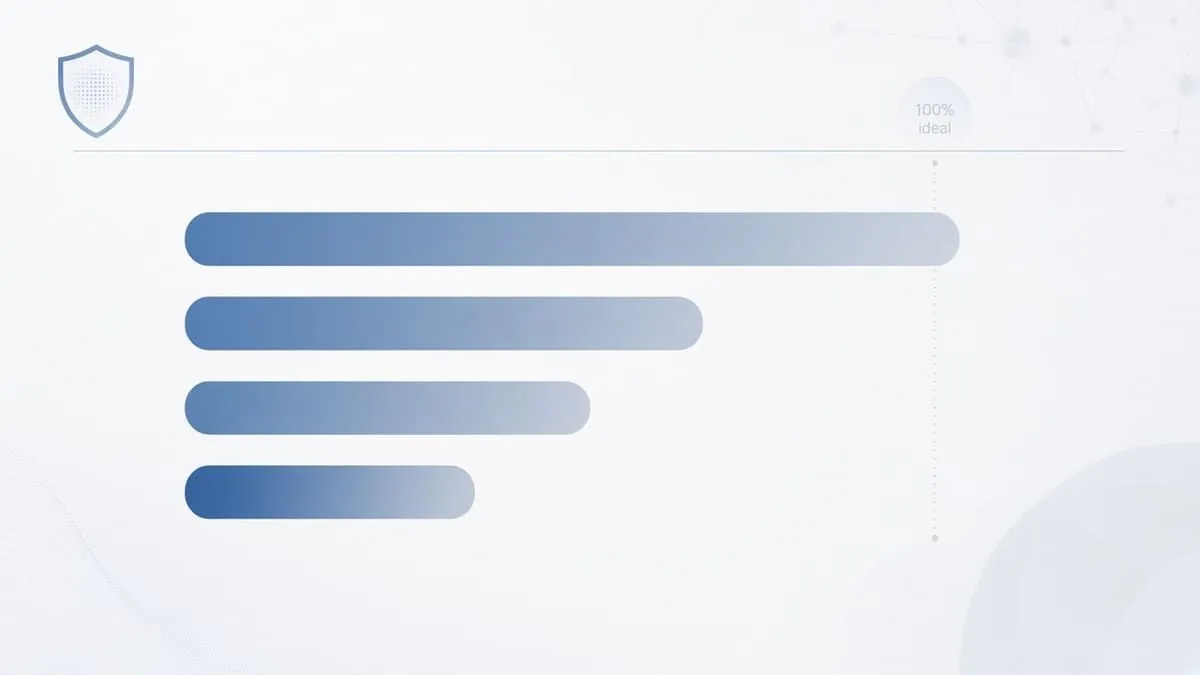
We audited dhs.gov, ice.gov, cbp.gov, and okta.com on October 30, 2026. 100% is the ideal — none reach it. These scores are public email / transport / website posture. They do not score IdP directory hygiene or this leak.
| Organization | Domain | Overall | vs 100% |
|---|---|---|---|
| ICE | ice.gov | 81% | −19 |
| CBP | cbp.gov | 81% | −19 |
| DHS | dhs.gov | 70% | −30 |
| Okta | okta.com | 70% | −30 |
| Domain | Identity | Transport | Website |
|---|---|---|---|
| ice.gov | 90% | 45% | 87% |
| cbp.gov | 90% | 45% | 87% |
| dhs.gov | 90% | 45% | 40% |
| okta.com | 90% | 15% | 43% |
Audit links: dhs.gov · ice.gov · cbp.gov · okta.com
Our June 2026 federal agency list showed dhs.gov at 71% overall—today’s 70% is a fresh snapshot, not a trend line. okta.com Transport 15% is the weak mail-transport signal under spoofed “Okta admin” notices.
Blacklist and lookalike domains
Email blacklist checks (public DoH, October 30, 2026): dhs.gov, ice.gov, cbp.gov, and okta.com were clear on mail/domain lists we can query. Some Spamhaus lists remain unavailable via public resolvers—verify on vendor sites if critical.
DNS lookalike scans (BEC profile, registered signals only):
| Brand scanned | To review | Likely owned | BEC staging |
|---|---|---|---|
| dhs.gov | 12 | 0 | 1 |
| ice.gov | 14 | 0 | 0 |
| cbp.gov | 11 | 0 | 0 |
| okta.com | 78 | 1 | 2 |
High-interest registered names (investigate, not proof this leak used them):
| Lookalike | Brand | Technique | Note |
|---|---|---|---|
| dhs.org | dhs.gov | tld-swap | BEC staging (NS + MX) |
| ikta.com | okta.com | adjacent-key | BEC staging (NS + MX) |
| okkta.com | okta.com | duplication | BEC staging (NS + MX) |
| login-okta.com | okta.com | affix | Live NS + A + MX |
| account-okta.com | okta.com | affix | Live NS + A + MX |
| ice.com | ice.gov | tld-swap | Live NS + A + MX |
Type dhs.gov, ice.gov, cbp.gov, and okta.com yourself. Continuous monitoring: Cybersquat Domain Monitoring.
Related coverage
- Top federal agencies email security (June 2026)
- Government & education breaches tracker
- MFA support directory
- Clover Health social engineering
- McKesson vishing lawsuits
- EY tax ITSM help-desk breach
- Vibetech credential re-exposure
- CyberCartel Claude / Grok LATAM banks
- TRICARE phishing JBSA
- FBI FishHub MicroScan seizure
Check your domain free at audit.emailmenow.com, or see automated reports and monitoring.
Sources: WIRED (Oct 28, 2026) · TechCrunch (Oct 28–29, 2026) · BBC · Nextgov/FCW · The Guardian · Reuters via Investing.com · Okta statement via WIRED · DHS statement via WIRED/BBC · Alexander Leslie / Recorded Future via WIRED · Okta YubiKey help. Independent EmailMeNow audits, blacklist, and cybersquat probes October 30, 2026. Website-tech probe skipped (WEBSITE_TECH_PROBE_KEY not set). No Icepick rows, names, or group lists reproduced. Domain scores: audit.emailmenow.com only.
SB 2610 may help limit exemplary damages for eligible businesses that maintain a documented cybersecurity program; not legal advice or a guarantee.