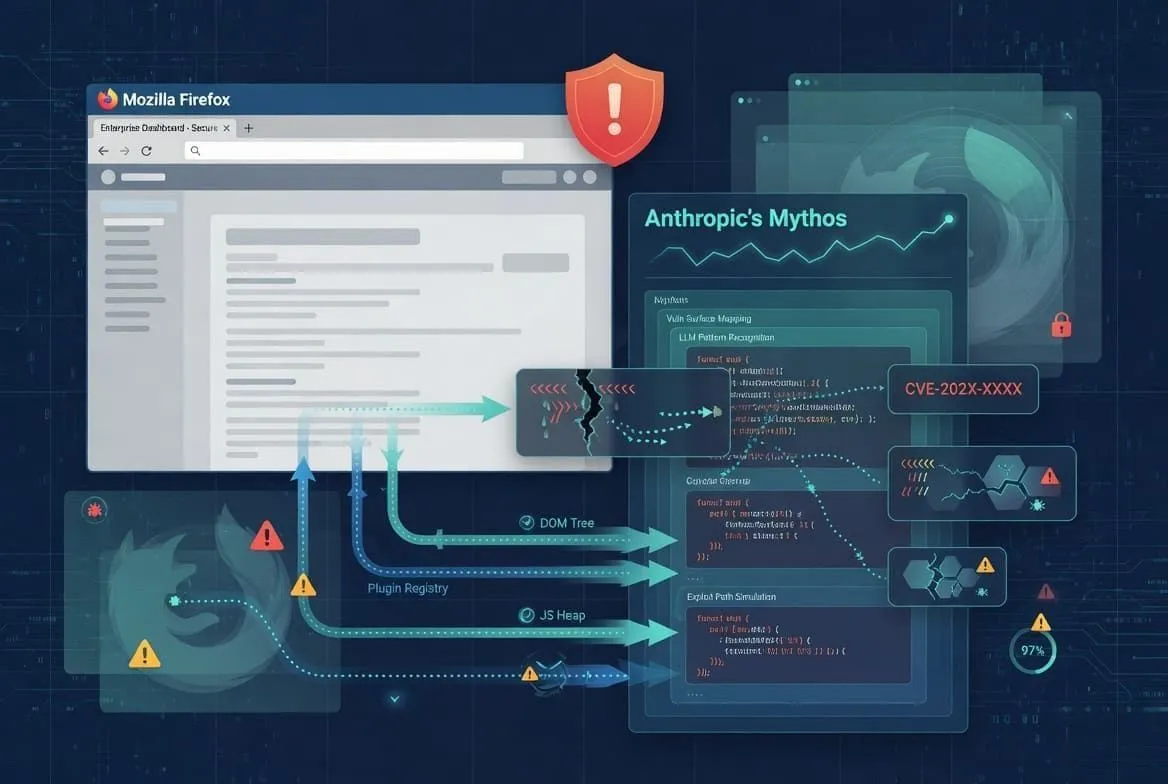
Mozilla has released a new version of Firefox that patches 271 vulnerabilities discovered using Anthropic’s Mythos Preview, an AI-powered security testing tool.
This is one of the largest single-application vulnerability disclosures in recent memory and highlights both the power of AI-assisted security research and the scale of potential undiscovered flaws across the digital ecosystem.
What Happened
Anthropic’s Mythos Preview was used to systematically analyze Firefox and identified hundreds of security issues that traditional testing methods had missed. Mozilla moved quickly to patch the vulnerabilities and released an updated version of the browser.
While Mozilla has not disclosed the full technical details of every flaw, the sheer volume — 271 vulnerabilities in a single, widely used application — is significant.
The Bigger Question: How Many Bugs Exist Elsewhere?
If an AI system like Mythos can uncover 271 vulnerabilities in one web browser, it raises an important question:
How many undiscovered vulnerabilities exist across other critical systems?
Consider the potential scale:
- Operating Systems (Windows, macOS, Linux distributions, mobile OS)
- Enterprise Software (Microsoft 365, Salesforce, ServiceNow, etc.)
- Hardware & Firmware (routers, IoT devices, servers, mobile chipsets)
- Fintech & Banking Platforms (core banking systems, payment gateways, mobile banking apps)
- Cloud Infrastructure & APIs
Many of these systems are far more complex than a web browser. If AI-driven testing continues to improve, organizations may discover that their current security testing programs have only scratched the surface.
This is particularly concerning for financial institutions and organizations that handle sensitive data, where even a single unpatched vulnerability can lead to massive data breaches or fraud.
Regulatory Interest from Banks and the Treasury Department
There are growing indications that financial regulators and major banks are taking notice of AI-powered security testing tools like Mythos.
Some large financial institutions have reportedly begun internal reviews and pilot programs using advanced AI testing platforms, driven in part by guidance and expectations from the U.S. Department of the Treasury and other regulators focused on operational resilience and third-party risk.
Key areas of focus include:
- The ability of AI tools to find vulnerabilities that traditional penetration testing and code reviews miss
- The need for financial institutions to adopt more advanced security testing methods
- Supply chain risk — understanding how secure the software and platforms they rely on actually are
While specific Treasury directives on Mythos have not been made public, the broader message from regulators is clear: traditional security testing is no longer sufficient in an era of increasingly sophisticated attacks and complex software supply chains.
Why This Matters for Texas Law Firms and Businesses
Law firms and professional services organizations rely heavily on web browsers, cloud platforms, email systems, and fintech tools. Many of these systems have not undergone the same level of AI-assisted security scrutiny that Firefox just received.
A single undiscovered vulnerability in a widely used platform could expose:
- Client confidential information
- Financial data
- Privileged communications
- Business operations
This reinforces the need for organizations to move beyond basic security hygiene and adopt more rigorous testing, monitoring, and vendor risk management practices.
Key Takeaways
- AI-powered security tools like Mythos are dramatically increasing the number of vulnerabilities being discovered.
- The 271 vulnerabilities patched in Firefox are likely just the beginning.
- Financial institutions and regulators are actively evaluating these new testing capabilities.
- Organizations that continue to rely solely on traditional security testing may be operating with a false sense of security.
Stay ahead of emerging threats.
Run a free Instant Cybersecurity Audit at audit.emailmenow.com to evaluate your organization’s current security posture, including email security, third-party risk, and overall resilience.
Contact EmailMeNow IT Consulting for help with advanced security testing strategies and compliance programs.
This development signals a shift in how vulnerabilities will be discovered going forward — and organizations that adapt early will be better positioned to protect client data and maintain trust.